

No products in the cart.
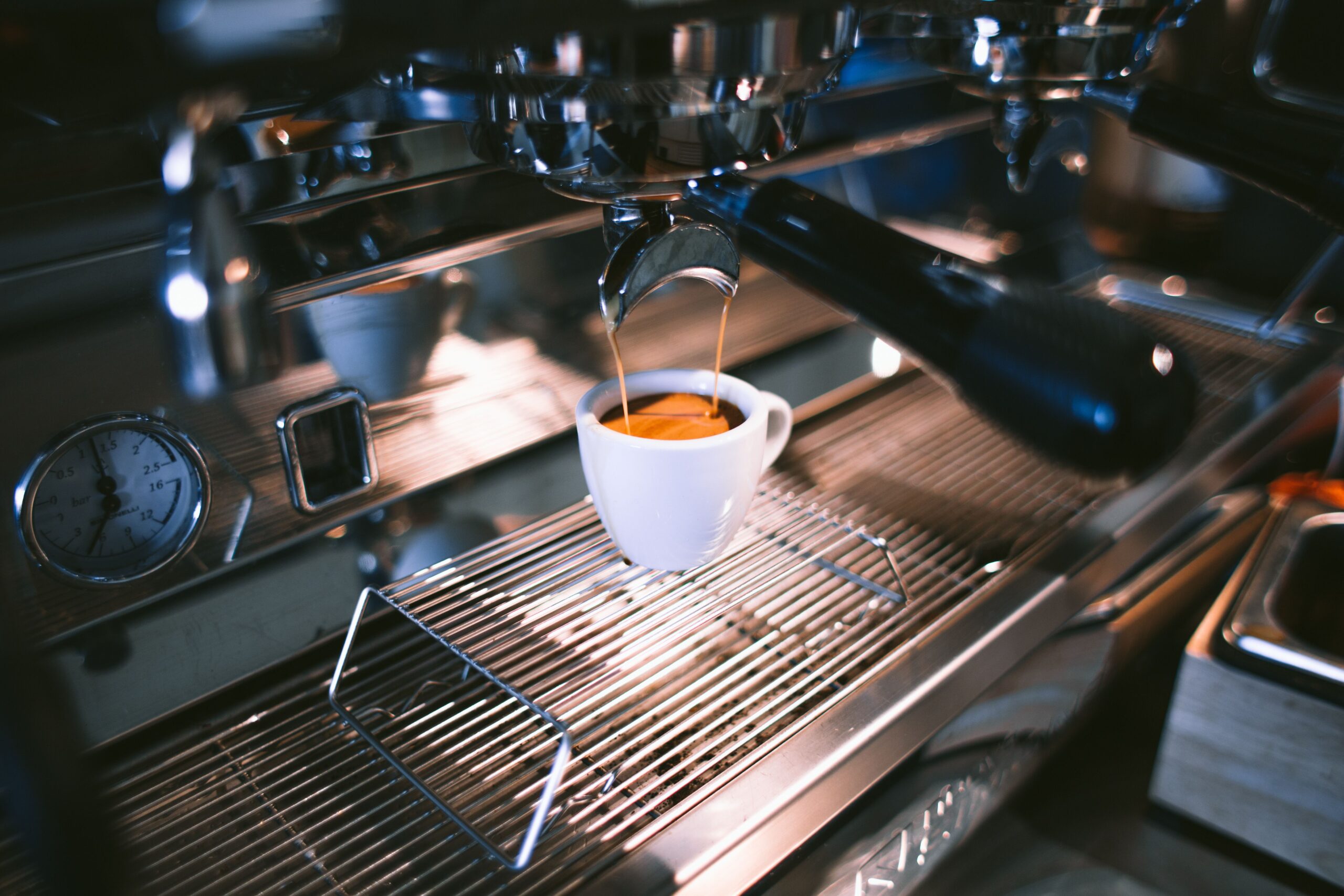
What Size Espresso Machine Does Your Coffee Shop Actually Need?
Choosing an espresso machine is one of the first major equipment decisions a new café owner faces — and one of the most consequential. Get the size wrong in either direction and you’ll feel it: a machine that’s too small creates bottlenecks during your busiest hours, while one that’s significantly oversized ties up capital that could have gone elsewhere.
The good news is that this decision is more straightforward than equipment suppliers tend to make it seem. Three factors do most of the work: your expected daily drink volume, the shape of your peak-hour demand, and a realistic view of where your business is headed in the next year or two.
Volume Is the Starting Point — But Not the Only Input
The most common sizing mistake new café owners make is choosing equipment to match opening-week projections. The problem is that your first few weeks are probably not representative of where you’ll be six months in, especially if your marketing and customer retention are working. A café doing 30 drinks a day in month one might be doing 80 or more by month six — that’s not an unusual trajectory for a café that’s finding its feet. Sizing to today’s volume rather than a realistic near-term picture is how businesses end up in an expensive upgrade cycle sooner than expected.
If you’re still working out how drink volume maps to equipment requirements, How Many Cups Per Day Justify a Commercial Espresso Machine? goes into this in more depth.
Single-Group Machines: The Right Tool for the Right Context
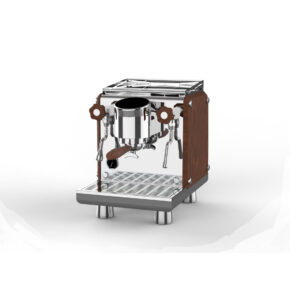
A single-group commercial espresso machine has one brew head — meaning one drink at a time. That constraint sounds limiting, but for the right operation it’s genuinely adequate. These machines make sense for coffee carts, mobile trailers, kiosks, boutique retail environments, and any business consistently serving fewer than around 50 drinks a day. They’re cheaper to buy, simpler to install, take up less counter space, and draw less electrical power.
The limitation becomes visible in real time: during a rush, your barista is effectively queued behind the machine — one drink finishes before the next can begin. At low volumes that barely registers. At higher volumes it starts eating into service speed and customer experience in noticeable ways.
For businesses with real growth ambitions, a single-group machine is often a transitional choice — workable as a starting point if the budget demands it, but likely to be outpaced within a year or two.
Two-Group Machines: Where Most Independent Cafés Land
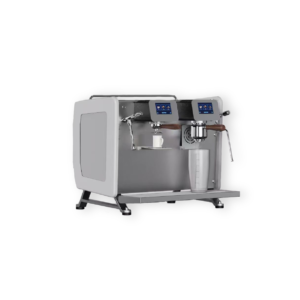
For the majority of independent coffee shops, a two-group commercial espresso machine is the practical starting point — and often the long-term solution. Two brew heads mean two drinks can be prepared simultaneously, which changes the workflow meaningfully. Baristas can stage drinks, maintain momentum during a rush, and keep service moving in a way that a single-group setup simply can’t match.
This is the category most commonly used by independent cafés, bakeries, restaurants, specialty coffee operations, and small business coffee programs. It delivers genuine commercial performance without the cost and footprint of larger systems — which is why it tends to represent the best value for most operators in this market.
If you’re comparing specific machines in this range, the guide on the best coffee machine for small business covers the key options and tradeoffs worth knowing.
Three-Group Machines: Built for High Volume, Priced Accordingly
Three-group machines are designed for environments where espresso is the core business and volume is consistently high. Busy city cafés, drive-through coffee shops, airport coffee bars, and operations running multiple baristas simultaneously are the typical use cases. The performance case is clear: faster throughput, shorter wait times, and the capacity to absorb a serious morning rush without service quality slipping.
The tradeoff is everything else. Purchase price, physical footprint, electrical requirements, and installation complexity all scale up significantly. For a startup café serving fewer than 100 drinks a day, a three-group machine is generally more than the business actually needs, and the capital is usually better deployed elsewhere. That calculus changes once volume consistently pushes past that threshold — but it’s a good reason not to over-buy on optimism alone.
Why Peak Hours Matter More Than Daily Totals
Here’s something most equipment buying guides underemphasize: total daily drink count is a less useful number than you might assume. What actually puts pressure on your equipment — and on the experience of customers standing in line — is how demand is distributed across the day.
A café pulling 80 drinks across 10 hours is operating in a very different mode from one pulling 80 drinks between 7am and 9am. The first scenario is manageable with modest equipment. The second is a demanding workload that requires real throughput capacity and fast recovery time between shots.
When sizing equipment, think through your busiest single hour, not your busiest day. If your peak is genuinely compressed — as it often is for cafés serving morning commuters — you may need meaningfully more capacity than your daily total alone would suggest.
Planning for Growth Without Overbuying
The practical industry guidance here is consistent: buy slightly ahead of your current position, but not dramatically so. If you’re genuinely torn between a single-group and a two-group machine, default to the two-group. If you’re torn between a two-group and a three-group, think carefully about whether your volume projections actually support it or whether you’re speculating.
The goal is headroom — enough capacity that growth doesn’t immediately trigger an upgrade — not buying maximum capacity on the theory that you’ll grow into it. Most independent cafés don’t need a three-group machine, and the ones that do usually know it from their numbers.
A Note on Home Machines
New café owners often ask whether they can start with a residential machine and save money on the initial outlay. It’s a reasonable question given the price gap. The short answer is that home machines are designed for occasional use, and commercial environments stress them in ways that lead to failure fairly quickly.
Can You Use a Home Espresso Machine in a Coffee Shop? What Every Café Owner Should Know covers this in full — including the limited scenarios where a home machine might be temporarily workable and why the long-term operating math usually makes commercial equipment the right call from day one.
The Full Cost Picture
Machine size affects the purchase price in obvious ways, but the budget picture is wider than that. Larger machines carry higher electrical requirements, different installation considerations, potentially higher maintenance costs, and different water filtration needs. Staff efficiency matters too — a well-matched machine keeps service flowing; a mismatched one creates friction that accumulates in labor costs and customer wait times.
The general shape of the market: single-group machines have the lowest entry cost, two-group machines offer the best value for most independent operations, and three-group machines are priced for the high-volume environments they’re built to serve.
For a full breakdown of pricing across the commercial equipment range:
How Much Does a Commercial Espresso Machine Cost in 2026?
What the Industry Emphasizes
Professional coffee organizations consistently frame equipment selection around reliability, workflow efficiency, and output consistency — not just capacity specs. These are the variables that translate most directly into customer experience and day-to-day operational stability, which is why they come up in every serious discussion of commercial coffee setup.
More from the Specialty Coffee Association:
Industry data and market research from the National Coffee Association:
Explore Commercial Espresso Machines
If you’re planning a new café or upgrading existing equipment, this collection covers commercial espresso machines designed for coffee shops, restaurants, and growing businesses across a range of volume and budget requirements:
https://westeez.com/product-category/commercial-espresso-machines-for-cafes-businesses
The Short Answer
For most independent cafés, a two-group commercial espresso machine is the right starting point. It provides real capacity for growth without the cost and complexity of larger systems, and it handles the kind of compressed peak-hour demand that most independent operations actually face.
The right size isn’t the biggest machine you can stretch the budget to cover, or the smallest one that technically handles your current output. It’s the machine that can absorb your busiest hours comfortably while leaving room for the growth you’re actively working toward.

2 comments
Pingback:
Commercial Espresso Machine vs Automatic Coffee Machine: Which Is Better for Business in 2026?Pingback:
coffee shop equipment