

No products in the cart.
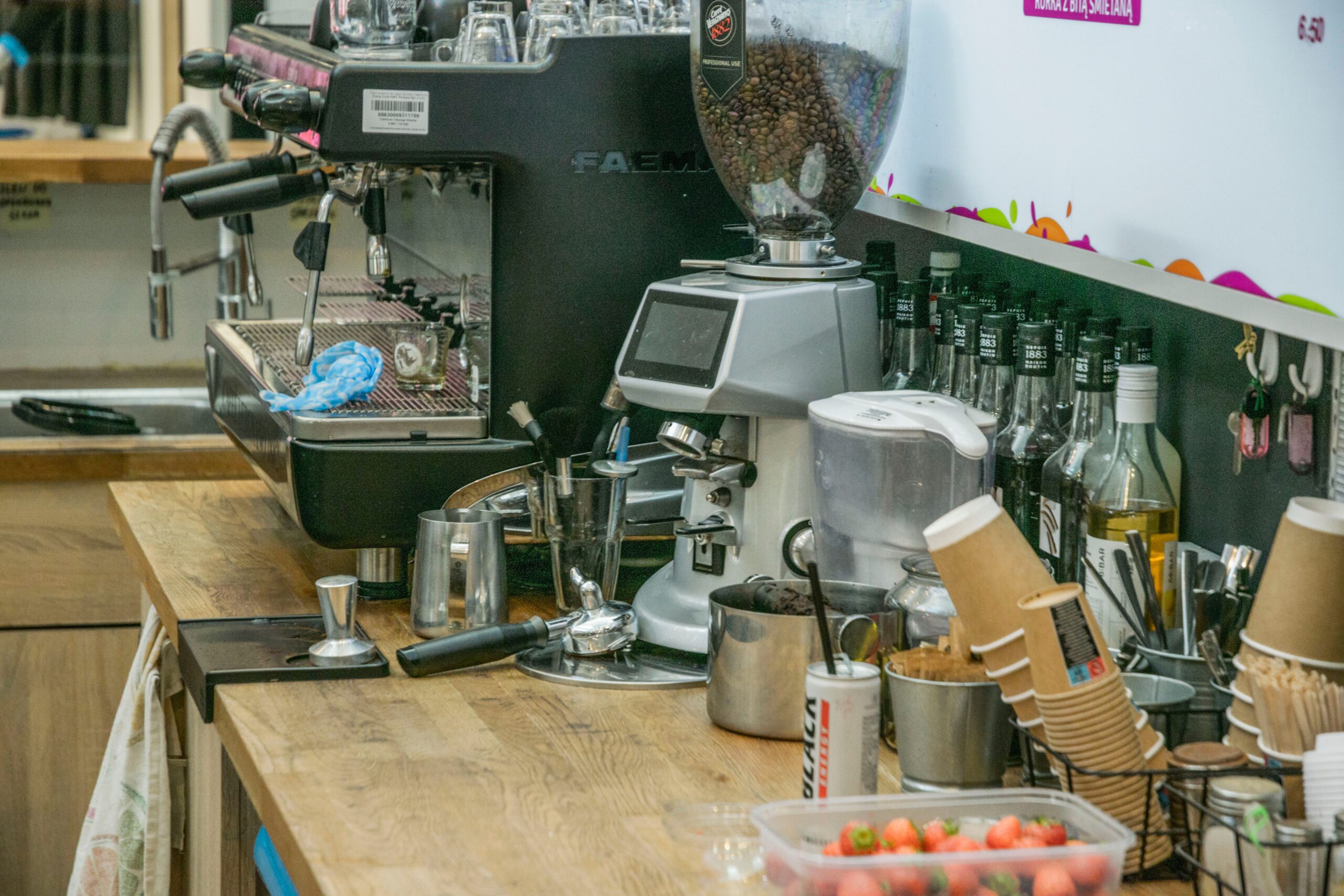
The Coffee Shop Equipment Checklist for 2026: What You Actually Need Before Opening Day
Most new café owners know they’ll need an espresso machine. What surprises them is how many supporting pieces of equipment are required before a café can actually function — and how the wrong call on any one of them can create friction that shows up in service quality and daily operations for years.
This checklist covers the essential equipment categories for opening a coffee shop, what to look for in each, and where new owners most commonly get tripped up.
Before you start pricing anything out, it’s worth getting clear on your expected daily drink volume and business model — those two variables do most of the work in determining what you need and at what capacity. Our guide on the Best Coffee Machine for Small Business is a useful starting point:
https://westeez.com/best-coffee-machine-for-small-business
The Essential Equipment List
1. Commercial Espresso Machine
The espresso machine is the operational center of the café. Everything else — workflow, service speed, drink quality, staff efficiency — arranges itself around what this machine can and can’t do. It’s also the most consequential purchasing decision on this list, because errors here are expensive to correct after the fact.
For most startup cafés, a two-group commercial machine is the right starting point. It allows baristas to prepare drinks simultaneously, keeps pace with moderate peak-hour demand, and has room to grow as volume builds. Single-group machines are adequate at very low volume; three-group machines are for genuinely high-demand operations running multiple baristas.
Recommended options include:
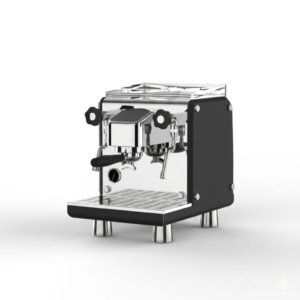
- Westeez KY-168 Commercial Espresso Machine
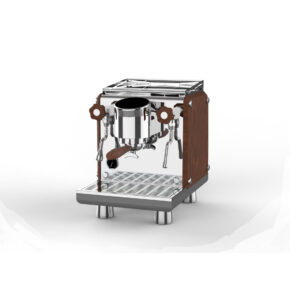
- Westeez JC-128 Double Head Commercial Espresso Machine
Browse the full collection of Commercial Espresso Machines:
https://westeez.com/product-category/commercial-espresso-machines-for-cafes-businesses
For help matching machine size to your expected volume:
What Size Espresso Machine Does a Coffee Shop Need?
https://westeez.com/what-size-espresso-machine-does-a-coffee-shop-need
2. Commercial Coffee Grinder
The grinder deserves more attention than it typically gets in startup planning. An excellent espresso machine cannot compensate for inconsistent grinding — particle size uniformity is one of the primary determinants of extraction quality, and a poor grinder undermines the entire coffee program regardless of what equipment sits next to it.
For a café, a commercial burr grinder is non-negotiable. Blade grinders are not suitable for professional use. The question at the commercial level is mainly workflow: dedicated grinders per group head is the standard for busier operations, though a single well-maintained grinder can serve lower-volume cafés adequately.
The Specialty Coffee Association consistently identifies grinder quality as foundational to extraction consistency — their resources are worth reviewing if you’re still building your understanding of what drives coffee quality at the professional level:
3. Water Filtration System
Water makes up roughly 98% of a cup of espresso, and its mineral composition affects how coffee extracts, how the finished drink tastes, and — less obviously but meaningfully — how long your equipment lasts. Hard water deposits scale on boilers and internal components over time, accelerating wear and inflating maintenance costs.
A commercial water filtration system is a modest investment relative to what it protects. Most equipment warranties also require filtered water, which means skipping this step can void coverage on considerably more expensive machines downstream.
4. Refrigeration
Milk is the most obvious refrigeration requirement, but the full picture is broader: alternative milks, cold brew concentrate, fresh food ingredients if you’re serving food, cold beverages, and display refrigeration if you want customers to see what’s available.
The right configuration depends on your layout and menu scope. Under-counter units work well in tight bar spaces; reach-in units provide higher capacity; display refrigerators serve the dual purpose of storage and merchandising. Most cafés need at least two refrigeration units from the start — one behind the bar for milk and bar ingredients, one for food or overflow.
5. Ice Machine
Easy to underestimate, especially when planning during cooler months. If your menu includes iced coffee, cold brew, frappes, or specialty cold beverages, ice demand can be substantial — and it spikes in warm weather faster than most new café owners anticipate.
Getting appropriately sized ice capacity in place before opening is considerably easier than trying to source ice mid-service during a busy summer period, or rushing an urgent equipment decision under operational pressure.
6. POS System
A modern point-of-sale system handles far more than transactions. Order management, inventory tracking, sales reporting, staff scheduling, and customer data all flow through the POS — which means a poorly chosen system creates friction across the entire operation, not just at the register.
Two systems dominate the independent café space:
Square POS: https://squareup.com
Toast POS: https://pos.toasttab.com
Both have café-specific configurations worth evaluating side by side. The right choice depends on menu complexity, whether you need tableside ordering, and how much you’ll actively use the reporting and inventory features.
7. Additional Brewing Equipment
Not every café is purely espresso-based, and the equipment list adjusts accordingly. Pour-over stations, batch brewers, drip coffee makers, and cold brew systems each serve different menu needs and customer expectations.
These items are generally less expensive than the espresso setup, but it’s worth thinking through what your actual menu requires rather than buying capabilities you won’t use. A focused menu backed by the right equipment consistently outperforms an ambitious menu with gaps in the equipment to support it.
8. Milk Frothing Tools
Stainless steel milk pitchers, thermometers, and latte art tools are small-ticket items that nonetheless affect drink quality and workflow in daily, concrete ways. Under-purchasing here is easy — and creates predictable friction. Running short on clean pitchers during a morning rush is a problem that’s entirely preventable with a modest additional investment at setup.
Buying doubles or triples of the items your baristas use most frequently is a small upfront cost that pays back quickly in reduced daily friction.
9. Cleaning Equipment
This category is the most consistently missing from startup purchase lists — partly because it’s unglamorous, partly because the consequences of skipping it don’t appear immediately. They appear quickly enough, though.
The essentials: group head brushes, backflush detergent, milk system cleaners, and descaling products matched to your specific machines. Daily cleaning routines protect the equipment, maintain flavor consistency, and surface developing issues before they become expensive repairs. Equipment lifespan is largely a function of maintenance quality, and that starts with having the right tools available from day one.
For context on what maintenance means for total equipment costs:
How Much Does a Commercial Espresso Machine Cost in 2026?
https://westeez.com/best-espresso-machine-for-small-cafe-in-2026-complete-buyers-guide/
10. Storage and Organization
Functional counter organization sounds like a minor consideration until you’re watching a busy barista lose several seconds per drink searching for ingredients, cups, or tools. Over the course of a morning rush, that friction accumulates into real service delays and real customer wait times.
Syrup organizers, cup dispensers, clearly labeled ingredient containers, and properly arranged shelving each contribute to workflow efficiency in ways that don’t show up on a spec sheet but register every single service hour.
A Note on Budget
A fully equipped startup café typically runs between $5,000 and $30,000 or more in equipment costs, depending on quality tier, capacity requirements, and how much of the list you’re sourcing new versus secondhand.
The sharpest tradeoffs tend to be at the espresso machine and grinder level — these are the items where buying below your operational requirements creates the most persistent daily problems, and where commercial-grade equipment from the start usually costs less over a five-year horizon than a series of under-spec purchases and replacements.
Where New Owners Get It Wrong
Buying on price alone. The cheapest equipment in each category rarely stays cheapest once you account for repair frequency, downtime during busy periods, and earlier-than-expected replacement. The espresso machine and grinder are where this miscalculation stings the most.
Sizing to opening-week volume. Equipment that handles current traffic can become a bottleneck within months if growth goes as hoped. Building in modest capacity headroom — particularly on the espresso machine — is almost always a better choice than buying to present needs alone.
Treating maintenance as optional. Every machine on this list has a maintenance requirement. Deferring cleaning routines and water treatment doesn’t eliminate maintenance costs; it converts them from predictable small expenses into unpredictable large ones, usually at the worst possible time.
Frequently Asked Questions
What’s the minimum equipment needed to open a coffee shop?
The true minimum for an espresso-focused café: a commercial espresso machine, grinder, water filtration system, refrigeration for milk, and a POS system. Everything else on this list serves genuine operational needs, but these five are what you need before you can open the doors at all.
How should a small café prioritize the list?
Start with what you need to serve your core menu reliably, then build from there. An espresso machine, grinder, and basic refrigeration get most cafés operational. Ice machine, additional brewing equipment, and storage solutions can follow once the core service is running smoothly.
What’s the single most important piece of equipment?
The espresso machine, for most cafés — not because the others don’t matter, but because it directly affects every drink on the menu, every service hour of every day. Getting this decision right has more downstream impact on the business than any other single equipment choice.
Add comment
You must be logged in to post a comment.