

No products in the cart.
How to Calculate the ROI of a Commercial Espresso Machine
Focus Keyword: Commercial Espresso Machine ROI
Running a successful café is about more than serving great coffee—it’s about making smart investments. A commercial espresso machine is often the biggest equipment purchase for a coffee business, so understanding its return on investment (ROI) is essential before making a decision.
Whether you’re opening a new café, upgrading your current equipment, or comparing suppliers, calculating ROI helps you determine how quickly your machine will pay for itself and how much profit it can generate over its lifespan.
If you’re still deciding which machine best fits your business, our guide to Best Coffee Machine for Small Business explains how to choose equipment based on business size and expected daily demand.
What Does ROI Mean for a Commercial Espresso Machine?
ROI (Return on Investment) measures how much profit an investment generates compared with its total cost.
For coffee shop owners, ROI includes much more than the purchase price.
Consider:
- Equipment cost
- Installation expenses
- Daily coffee sales
- Coffee bean costs
- Milk and ingredient costs
- Staff efficiency
- Maintenance expenses
- Electricity consumption
- Machine lifespan
A higher-quality commercial espresso machine may cost more initially but often produces higher ROI because it delivers greater consistency, faster service, and fewer repairs.
According to the Specialty Coffee Association (SCA), equipment consistency directly affects beverage quality and customer satisfaction, both of which influence repeat business.
Step 1: Calculate Your Initial Investment
Your investment should include every expense required to put the machine into daily operation.
Typical costs include:
| Item | Estimated Cost |
|---|---|
| Commercial espresso machine | $2,500–$8,000+ |
| Coffee grinder | $500–$2,000 |
| Water filtration | $300–$800 |
| Installation | $200–$800 |
| Training | Variable |
For example:
Machine: $4,500
Grinder: $900
Water filtration: $400
Installation: $300
Total Investment = $6,100
Businesses purchasing directly from manufacturers can often reduce equipment costs significantly. Our article Buying Coffee Equipment from China: A Complete Guide for Café Owners explains how sourcing directly can improve long-term ROI.
Step 2: Estimate Daily Coffee Sales
Next, estimate how many drinks your café sells each day.
Example:
- 150 cups/day
- Average selling price: $5.50
- Open 30 days/month
Monthly revenue:
150 × $5.50 × 30
= $24,750
Of course, revenue isn’t profit—you still need to subtract operating costs.
Step 3: Calculate Gross Profit Per Cup
Suppose each latte costs:
Coffee beans: $0.45
Milk: $0.55
Cup & lid: $0.25
Utilities: $0.10
Total cost:
$1.35
Selling price:
$5.50
Gross profit:
$4.15 per drink
Monthly gross profit:
150 × $4.15 × 30
= $18,675
The faster your machine serves customers, the more drinks your café can sell during peak hours. That’s why choosing equipment with sufficient capacity is critical.
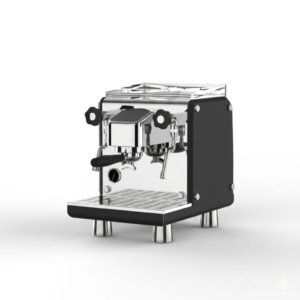
For cafés serving under 150 drinks daily, the Westeez KY-MiniA3 Commercial Espresso Machine provides an excellent balance of performance, footprint, and investment cost.
Step 4: Estimate Monthly Equipment Cost
Now spread the machine cost across its expected lifespan.
Example:
Machine investment:
$6,100
Expected lifespan:
8 years
96 months
Monthly equipment cost:
$6,100 ÷ 96
= $63.54/month
When compared with monthly coffee profits, the equipment cost becomes surprisingly small.
Step 5: Calculate Your Payback Period
The payback period tells you how long it will take for your commercial espresso machine to recover its purchase cost through profits.
A simple formula is:
Payback Period = Total Equipment Investment ÷ Monthly Net Profit
Using the previous example:
- Total equipment investment: $6,100
- Monthly net profit generated by coffee sales: $4,500
Payback Period:
$6,100 ÷ $4,500 = 1.36 months
Even after accounting for rent, labor, utilities, and other operating expenses, many successful cafés recover the cost of a quality commercial espresso machine within the first year.
Real ROI Example for a Small Café
Let’s compare two different purchasing decisions.
Option A – Lower Initial Cost
- Machine Price: $2,500
- Capacity: 80 cups/day
- More frequent maintenance
- Slower workflow
- Higher repair frequency
Estimated annual repair cost:
$800
Option B – Professional Commercial Machine
- Machine Price: $4,800
- Capacity: 180 cups/day
- Stable brewing temperature
- Faster milk steaming
- Better reliability
Estimated annual repair cost:
$200
Although Option B costs more initially, it allows staff to serve more customers during busy hours while reducing maintenance expenses.
Over five years, the higher-quality machine often delivers a significantly better return on investment.
Instead of focusing only on purchase price, experienced café owners evaluate the Total Cost of Ownership (TCO) before making a decision.
Four Factors That Increase ROI
1. Faster Service Speed
Every additional customer served during peak hours increases daily revenue.
Machines with stable temperature control and powerful steam systems improve workflow, allowing staff to prepare drinks more efficiently.
2. Consistent Coffee Quality
Customers return when every cup tastes the same.
According to the Specialty Coffee Association (SCA)
equipment consistency directly influences customer satisfaction and repeat business.
3. Lower Maintenance Costs
Preventive maintenance greatly reduces unexpected downtime and expensive repairs.
For a complete cleaning schedule, read our guide:
Commercial Espresso Machine Maintenance Checklist for Coffee Shops
Routine maintenance helps extend equipment lifespan and maximize long-term ROI.
4. Choosing Equipment That Matches Your Daily Demand
Buying a machine that’s too small creates bottlenecks during busy hours.
Buying one that’s too large increases unnecessary investment.
Selecting equipment based on expected daily cup volume is one of the easiest ways to improve profitability.
Common Mistakes That Reduce ROI
Many first-time café owners focus only on the purchase price.
However, the cheapest machine is rarely the most profitable.
Common mistakes include:
- Buying equipment without estimating daily cup volume.
- Ignoring routine maintenance.
- Choosing machines with limited after-sales support.
- Purchasing from suppliers without spare parts availability.
- Underestimating staff workflow efficiency.
Avoiding these mistakes can save thousands of dollars over the life of your equipment.
Why Choosing the Right Supplier Matters
A commercial espresso machine is a long-term investment, and your supplier plays an important role in maximizing ROI.
A reliable supplier should provide:
- Professional technical support
- Spare parts availability
- Warranty service
- Product training
- Long-term maintenance guidance
Businesses purchasing equipment internationally should also evaluate certifications, shipping costs, and after-sales support.
If you’re considering sourcing directly from manufacturers, read our guide:
Buying Coffee Equipment from China: A Complete Guide for Café Owners
This guide explains how to reduce purchasing risks while improving long-term profitability.
Why Coffee Businesses Choose Westeez
At Westeez, we believe that purchasing a commercial espresso machine should be viewed as a long-term business investment rather than simply buying equipment.
Our commercial machines are designed to deliver:
- Stable brewing temperatures
- Reliable Italian components
- Commercial-grade durability
- Easy daily maintenance
- Factory-direct pricing
- OEM & ODM customization services
For cafés serving approximately 50–150 cups per day, we recommend the:
Westeez KY-MiniA3 Commercial Espresso Machine
It offers an excellent balance between investment cost, workflow efficiency, and long-term reliability.
For restaurants and busy cafés serving 200+ cups per day, we recommend the:
Westeez JC-128 Commercial Double Group Espresso Machine
Its dual-group design and high-capacity boiler system help improve productivity while maximizing long-term ROI.
Final Thoughts
Calculating the ROI of a commercial espresso machine allows café owners to make smarter investment decisions.
Rather than focusing only on purchase price, consider the complete picture:
- Daily sales volume
- Equipment lifespan
- Maintenance costs
- Workflow efficiency
- Customer satisfaction
- Long-term operating expenses
A high-quality commercial espresso machine can continue generating profits for many years when matched with the right business model and maintained properly.
If you’re still comparing different commercial coffee machines, you may also find our guide useful:
Best Coffee Machine for Small Business
It explains how to choose the right equipment based on your business size and daily coffee demand.
Frequently Asked Questions
What is a good ROI for a commercial espresso machine?
Many cafés recover their equipment investment within 6–18 months, depending on daily sales volume, operating costs, and pricing strategy.
Should I buy the cheapest commercial espresso machine?
Not always. Lower-priced machines often require more maintenance, offer lower productivity, and have a shorter service life, increasing the total cost of ownership.
How can I improve the ROI of my espresso machine?
You can improve ROI by:
- Choosing equipment that matches your daily cup volume.
- Performing regular preventive maintenance.
- Training staff to improve workflow.
- Purchasing from reliable suppliers with strong after-sales support.
Does regular maintenance improve ROI?
Yes. Regular maintenance reduces repair costs, minimizes downtime, extends equipment lifespan, and helps maintain consistent coffee quality.
Is buying directly from a manufacturer more cost-effective?
For many coffee businesses, purchasing directly from a trusted manufacturer can reduce equipment costs and improve ROI, provided the supplier offers reliable quality, technical support, and warranty services.
5 comments
Pingback:
Commercial Espresso Machine Features That Actually Matter for Café OwnersPingback:
How Often Should You Service a Commercial Espresso Machine? Maintenance GuidePingback:
How to Calibrate a Commercial Coffee Syrup Dispenser for CafésPingback:
Single Group vs Two Group Espresso Machine: Which Is Best for Your Café?Pingback:
Why Is My Commercial Espresso Machine Losing Pressure?