

No products in the cart.
What Is Pre-Infusion in Espresso? How It Improves Extraction Consistency
When making espresso, the first few seconds of brewing can have a significant impact on the final cup. Before full brewing pressure is applied, some espresso machines introduce water to the coffee puck at a lower pressure. This process is known as pre-infusion.
Pre-infusion is an important espresso brewing technique because it allows the coffee grounds to become evenly saturated before higher pressure is applied. When properly controlled, it can help improve extraction consistency, reduce the risk of channeling, and make espresso easier to dial in.
For café owners and baristas, understanding how pre-infusion works can also help explain why two machines with similar specifications may produce different results.
What Is Pre-Infusion in Espresso?
Pre-infusion is the initial stage of espresso extraction in which water contacts the coffee grounds before the machine reaches its normal brewing pressure.
Instead of immediately applying full pressure to a dry coffee puck, the machine introduces water more gently. This allows the grounds to absorb water and become saturated before the main extraction begins.
Different espresso machines achieve pre-infusion in different ways. Some use mechanical systems, while others use electronically controlled pumps or programmable pressure profiles.
The exact pressure and duration can vary significantly depending on the machine and brewing method. Therefore, there is no single pre-infusion setting that works for every coffee.
Why Does Pre-Infusion Matter?
One of the main reasons pre-infusion is used is to improve the consistency of water flow through the coffee puck.
When high pressure reaches a dry or unevenly prepared puck immediately, water may find weak areas and create channels. Water then travels through those paths more easily instead of flowing evenly through the coffee.
Pre-infusion gives the coffee bed time to become saturated before the main pressure is applied.
This can help create a more stable extraction and reduce some of the inconsistencies associated with uneven puck preparation.
For specialty coffee businesses, consistency is especially important. The Specialty Coffee Association emphasizes coffee quality, education, research, standards, and consistent communication throughout the coffee value chain.
How Does Pre-Infusion Work?
The basic process can be simplified into three stages.
Stage 1: Water Contacts the Coffee
Water first reaches the surface of the coffee puck.
At this point, the goal is not necessarily to extract the entire espresso shot. Instead, the coffee grounds begin absorbing water.
Stage 2: The Coffee Puck Becomes Saturated
As water spreads through the coffee bed, the grounds begin to swell and become more evenly wet.
This can help reduce dry areas inside the puck before full extraction pressure is introduced.
Stage 3: Full Extraction Begins
After the pre-infusion stage, the machine increases pressure and the main espresso extraction takes place.
The exact pressure profile depends on the machine.
Some systems use a short programmed pre-infusion, while other machines allow baristas to control pressure or flow more precisely.
Can Pre-Infusion Reduce Channeling?
Pre-infusion can help reduce the risk of channeling, but it is not a substitute for good puck preparation.
Channeling occurs when water finds a path of lower resistance through the coffee puck. This can result in uneven extraction, where some areas of the coffee are over-extracted while others are under-extracted.
A more evenly saturated puck can provide a better starting point for the main extraction.
However, baristas should still pay attention to:
- Grind consistency
- Coffee dose
- Distribution
- Tamping
- Basket condition
- Coffee freshness
If the coffee puck is poorly prepared, increasing pre-infusion will not automatically solve the problem.
Does Pre-Infusion Make Espresso Taste Better?
Pre-infusion can improve the consistency of espresso extraction, but it does not guarantee better flavor in every situation.
The effect depends on several factors, including:
- Coffee origin
- Roast level
- Grind size
- Dose
- Brewing ratio
- Water temperature
- Pressure profile
- Pre-infusion duration
For some coffees, a controlled pre-infusion period may help produce a more balanced and even extraction.
For others, a shorter or simpler extraction profile may work better.
The goal is not to use the longest possible pre-infusion. The goal is to find a brewing profile that works with the specific coffee.
Pre-Infusion and Bitter Espresso
Pre-infusion can also be relevant when troubleshooting espresso that tastes excessively bitter.
However, bitterness has many possible causes.
If you are experiencing bitter espresso, check the grind size, extraction time, brewing temperature, coffee roast, and brewing ratio before assuming that pre-infusion is the problem.
Our guide Why Does Espresso Taste Bitter? Common Causes and How to Fix Them explains the most common causes of excessive bitterness and provides a systematic approach to adjusting espresso extraction.
Pre-infusion should be treated as one variable within the overall brewing process rather than a universal solution.
How Long Should Espresso Pre-Infusion Last?
There is no universal pre-infusion time that applies to every espresso machine and every coffee.
Some machines use only a few seconds of pre-infusion, while other systems allow longer low-pressure stages or more advanced pressure profiling.
The ideal duration depends on:
- Machine design
- Coffee roast
- Grind size
- Dose
- Puck preparation
- Desired extraction profile
For this reason, café owners should follow the machine manufacturer’s operating recommendations and then adjust the brewing recipe based on the coffee being used.
Avoid changing multiple variables at the same time. If you change pre-infusion time, grind size, dose, and temperature simultaneously, it becomes difficult to determine which adjustment actually affected the result.
Pre-Infusion on Commercial Espresso Machines
Pre-infusion becomes particularly interesting in commercial environments because cafés need to reproduce the same espresso recipe throughout the day.
A busy café may have several baristas working during different shifts. If the machine provides a stable and repeatable pre-infusion process, it can make it easier for baristas to maintain a consistent workflow.
However, machine configuration should match the needs of the business.
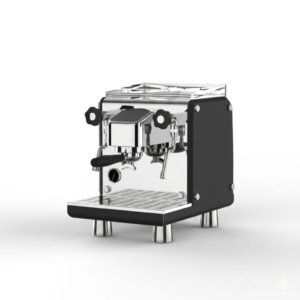
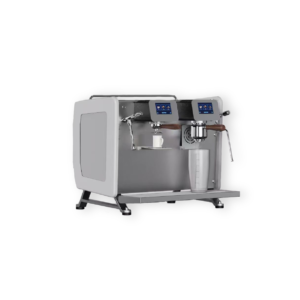
For smaller commercial operations, the Westeez KY Minia6 Single Group Espresso Machine provides a compact single-group configuration for professional coffee preparation.
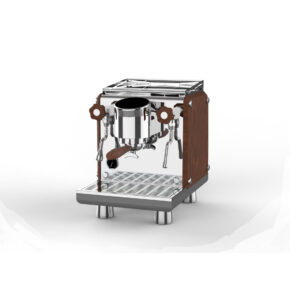
For cafés with higher workflow requirements, the Westeez KY-228 Two Group Commercial Espresso Machine offers a two-group configuration that allows more brewing activity to take place simultaneously.
For higher-volume professional environments, the Westeez JC-128 Commercial Espresso Machine with Three Boilers uses a three-boiler design intended for demanding commercial applications.
The important point is that pre-infusion is only one part of the machine’s overall brewing system. Boiler configuration, temperature stability, pump behavior, group design, and workflow all contribute to the final result.
Pre-Infusion vs Immediate Full-Pressure Extraction
The difference can be summarized simply.
Immediate Full-Pressure Extraction
Water reaches the coffee puck and the machine quickly moves toward its main brewing pressure.
Advantages may include:
- Simple operation
- Fast brewing workflow
- Straightforward recipe management
However, aggressive pressure applied to an uneven puck can increase the risk of uneven water flow.
Pre-Infusion
Water initially contacts the coffee puck at lower pressure before the main extraction phase.
Potential advantages include:
- More gradual puck saturation
- More controlled water entry
- Potentially more even extraction
- Greater control over the extraction profile
Neither method is automatically better for every coffee.
The quality of the final espresso depends on how the complete recipe is designed and controlled.
Does Every Commercial Espresso Machine Need Pre-Infusion?
Not necessarily.
Some cafés may benefit from machines with programmable pre-infusion or more advanced pressure control, particularly when they work with specialty coffees and want greater control over extraction.
Other businesses may prioritize:
- Simplicity
- Speed
- Reliability
- Ease of operation
- Consistent workflow
When choosing equipment, café owners should evaluate the complete brewing system rather than selecting a machine based on one feature.
Our article Commercial Espresso Machine Features That Actually Matter for Café Owners provides a broader framework for evaluating commercial espresso machine specifications and deciding which features actually matter for a café.
How Baristas Can Experiment With Pre-Infusion
If your espresso machine allows pre-infusion adjustment, make changes gradually.
Start with your existing recipe and record:
- Dose
- Grind setting
- Yield
- Extraction time
- Water temperature
- Pre-infusion time
- Flavor
Then change only one variable.
For example, you could slightly increase pre-infusion while keeping the grind, dose, temperature, and yield unchanged.
Taste the result and compare it with the original shot.
This process creates a more reliable way to understand how pre-infusion affects a particular coffee.
Common Pre-Infusion Mistakes
Using Pre-Infusion to Fix Poor Grinding
Pre-infusion cannot compensate for a badly calibrated grinder.
Assuming Longer Is Always Better
A longer pre-infusion does not automatically produce better espresso.
Changing Too Many Variables
Changing several brewing parameters simultaneously makes troubleshooting difficult.
Ignoring Puck Preparation
Even with pre-infusion, poor distribution and tamping can still cause channeling.
Copying Another Café’s Recipe
A recipe that works for one coffee may not work for another.
Coffee origin, roast level, processing method, freshness, and grind characteristics all affect extraction.
Final Thoughts
So, what is pre-infusion in espresso?
It is the initial stage of brewing in which water gently wets the coffee puck before the machine reaches its main extraction pressure.
Its primary value is greater control over how water first interacts with the coffee grounds. When combined with consistent grinding, dosing, distribution, temperature, and brewing ratios, pre-infusion can help improve extraction consistency.
For café owners, the most important lesson is that pre-infusion should not be treated as a magic feature. It is one tool within a much larger espresso preparation system.
A well-designed commercial espresso machine can provide the control and consistency needed for professional brewing, but the final quality still depends on the coffee, recipe, equipment, and barista technique working together.
Understanding pre-infusion gives café owners and baristas another useful variable to consider when dialing in espresso and building a more consistent coffee program.

Add comment
You must be logged in to post a comment.