

No products in the cart.
Commercial Espresso Machine Features That Actually Matter for Café Owners
Opening a café is not only about serving great coffee — it is also about choosing equipment that can handle daily business demands. For many café owners, selecting the right commercial espresso machine can directly affect workflow efficiency, beverage quality, customer satisfaction, and long-term operating costs.
With so many machines available on the market, it can be difficult to understand which features actually matter. Some machines focus on appearance and extra functions, while professional café owners usually care more about reliability, consistency, speed, and maintenance.
This guide explains the most important commercial espresso machine features that every café owner should consider before making an investment.
1. Brewing Capacity and Daily Output
The first feature café owners should evaluate is whether the espresso machine can handle their expected daily volume.
A home espresso machine may work well for personal use, but commercial environments require equipment designed for continuous operation.
Important factors include:
- Number of brewing groups
- Boiler capacity
- Recovery time between shots
- Ability to serve multiple customers quickly
For example, a small coffee shop serving 100–150 cups per day may be comfortable with a single-group commercial machine, while busy cafés often require a two-group machine to maintain speed during peak hours.
Before purchasing equipment, café owners should estimate their expected sales volume. Our guide on How Many Espresso Machines Does a Coffee Shop Need? explains how different café sizes can determine equipment requirements.
2. Temperature Stability and Boiler System
Consistent temperature is one of the most important features of a professional espresso machine.
Espresso extraction requires precise temperature control. Small temperature fluctuations can affect:
- Coffee flavor
- Extraction quality
- Drink consistency
Commercial machines usually use larger boilers or multiple boiler systems to provide better stability compared with consumer models.
High-volume cafés often prefer machines with:
- Independent steam boiler
- Brewing boiler
- Advanced temperature control systems
These features allow baristas to prepare espresso and steam milk simultaneously without reducing performance.
3. Number of Groups: Single Group vs Multiple Groups
The number of groups determines how many espresso shots can be prepared at the same time.
A single-group machine is usually suitable for:
- Small cafés
- Bakeries
- Low-volume coffee shops
A two-group espresso machine is better for:
- Busy cafés
- Restaurants
- Locations with multiple baristas
For growing businesses, investing in additional capacity can prevent bottlenecks during busy periods.
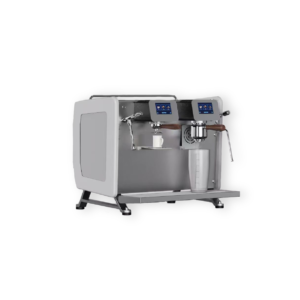
Westeez offers different commercial solutions, including the Westeez KY-MiniA3 Single Group Commercial Espresso Machine for smaller operations and the Westeez KY-228 2 Group Commercial Espresso Machine for cafés requiring higher output.
4. Steam Power and Milk Beverage Performance
Many café customers order milk-based drinks such as:
- Cappuccino
- Latte
- Flat white
- Mocha
Because of this, steam performance is a critical commercial espresso machine feature.
A professional machine should provide:
- Strong steam pressure
- Fast milk heating
- Consistent microfoam quality
Weak steam performance can slow down service and reduce drink quality during busy periods.
For cafés where milk drinks represent a large percentage of sales, steam capacity should be one of the top buying considerations.
5. Durability and Build Quality
Commercial espresso machines are long-term business investments.
Unlike home machines, professional equipment may operate for many hours every day. Therefore, construction quality matters.
Important durability factors include:
- Stainless steel body
- Commercial-grade components
- Reliable pumps
- Easy access for maintenance
A cheaper machine may save money initially but create higher costs through repairs, downtime, and replacement.
Café owners should consider the total cost of ownership rather than only the purchase price.
6. Ease of Maintenance and Cleaning
Maintenance directly affects machine lifespan and coffee quality.
A good commercial espresso machine should allow operators to easily perform:
- Daily cleaning
- Backflushing
- Group head maintenance
- Boiler checks
Regular maintenance helps prevent equipment failure and protects coffee consistency.
For a complete maintenance routine, café owners can also check our guide:
Commercial Espresso Machine Maintenance Checklist for Coffee Shops
7. Energy Efficiency and Operating Costs
Energy consumption is another feature that is often overlooked.
Commercial espresso machines operate for many hours each day, meaning energy efficiency can affect monthly expenses.
Useful features include:
- Efficient heating systems
- Standby modes
- Insulated boilers
- Smart temperature management
Choosing an efficient machine can reduce operating costs over time and improve overall business profitability.
For café owners evaluating equipment investment, understanding long-term returns is important. Read our guide on How to Calculate the ROI of a Commercial Espresso Machine before making a purchase decision.
8. User-Friendly Controls and Workflow Design
A commercial espresso machine should help baristas work faster, not create additional complexity.
Useful workflow features include:
- Easy-to-use controls
- Programmable dosing
- Clear pressure indicators
- Comfortable group positioning
During busy service periods, small design improvements can save valuable time.
A well-designed machine allows baristas to focus on customers instead of constantly adjusting equipment.
9. Professional Certifications and Industry Standards
Reliable equipment manufacturers often follow professional coffee industry standards.
Café owners can refer to organizations such as the Specialty Coffee Association (SCA) to learn more about professional coffee quality standards and industry education.
Understanding industry standards helps businesses make better purchasing decisions.
Final Thoughts: Choose Features Based on Your Café Needs
The best commercial espresso machine is not necessarily the most expensive one. The right choice depends on your café’s size, customer volume, menu requirements, and future growth plans.
The most important features to consider are:
- Brewing capacity
- Temperature stability
- Steam performance
- Durability
- Maintenance requirements
- Operating costs
By focusing on these practical factors, café owners can choose equipment that supports daily operations and provides a better return on investment.
A commercial espresso machine is not just a coffee maker — it is one of the most important tools behind a successful coffee business.


2 comments
Pingback:
How Long Does a Commercial Espresso Machine Last? Lifespan & Maintenance GuidePingback:
What Is Pre-Infusion in Espresso? Benefits & How It Works