

No products in the cart.
How Much Coffee Does a Café Use Per Day? A Coffee Bean Consumption Guide
Running a successful café requires more than great coffee and reliable equipment. Coffee shop owners also need to understand how much coffee they use every day, how often to order fresh beans, and how to control ingredient costs.
One of the most practical questions for new café owners is:
How much coffee does a café use per day?
The answer depends on daily sales, drink recipes, espresso dose, and coffee waste. A small café serving 50 drinks may use less than 1 kilogram of coffee beans per day, while a busy coffee shop serving 300 espresso-based drinks could use more than 5 kilograms.
In this guide, we explain how to calculate daily coffee bean consumption, estimate weekly and monthly purchasing requirements, manage coffee costs, and reduce unnecessary waste.
How Much Coffee Does a Café Use Per Day?
A café’s daily coffee consumption depends primarily on how many drinks it sells and how many grams of coffee are used in each recipe.
For planning purposes, many espresso-focused cafés can start with an estimated dose of 18–20 grams per double espresso.
The Specialty Coffee Association’s research on espresso preparation found that 18–20 grams was a common dose among surveyed baristas.
However, the amount used in your café may differ depending on the coffee, basket size, brewing recipe, and menu.
For example, assuming each drink requires one 18-gram espresso dose:
| Daily Coffee Drinks | Coffee Beans Per Day | Coffee Beans Per 30 Days |
|---|---|---|
| 50 drinks | 0.9 kg | 27 kg |
| 100 drinks | 1.8 kg | 54 kg |
| 150 drinks | 2.7 kg | 81 kg |
| 200 drinks | 3.6 kg | 108 kg |
| 300 drinks | 5.4 kg | 162 kg |
| 500 drinks | 9.0 kg | 270 kg |
These estimates exclude coffee waste, dial-in shots, and recipes requiring multiple espresso doses.
They also assume that every drink uses espresso. Cafés selling drip coffee, cold brew, or other brewing methods should calculate those beverages separately.
How Many Grams of Coffee Beans Are Used Per Espresso?
The amount of ground coffee used for espresso is called the dose.
A common starting point for a double espresso is approximately 18 grams, although recipes vary.
For example:
- 16g dose: potentially suitable for certain baskets and recipes
- 18g dose: a common starting point for double espresso
- 20g dose: used in some larger baskets and specialty coffee recipes
- 22g dose: used for certain higher-dose espresso recipes
A latte, cappuccino, flat white, or Americano may all use the same double espresso base, depending on the café’s menu.
Therefore, a café selling 100 drinks does not necessarily use 100 different coffee doses if some drinks require additional shots or use alternative brewing methods.
Example: A Café Selling 120 Drinks Daily
Suppose a café sells:
- 40 lattes
- 30 cappuccinos
- 20 Americanos
- 20 flat whites
- 10 espressos
If every drink uses one 18g dose:
120 × 18g = 2,160g
That equals 2.16 kg of coffee beans per day before waste.
Over 30 days:
2.16 × 30 = 64.8 kg per month.
This calculation gives the café owner a starting point for purchasing and inventory planning.
How to Calculate Daily Coffee Bean Consumption
The basic formula is straightforward:
Daily Coffee Consumption (kg) = Daily Espresso Doses × Coffee Dose (g) ÷ 1,000
For example, a café preparing 180 espresso doses daily with 18g per dose would use:
180 × 18 ÷ 1,000 = 3.24 kg per day.
However, real cafés also consume coffee beans during grinder calibration, staff training, and unsuccessful extractions.
For that reason, it is useful to include a waste allowance.
Adding a Coffee Waste Allowance
Suppose the same café uses 3.24 kg of coffee in drinks and estimates an additional 8% of that amount for calibration and waste.
3.24 × 1.08 = 3.4992 kg per day.
Rounded for planning purposes, the café would need approximately 3.5 kg daily.
Over 30 days:
3.4992 × 30 = 104.98 kg per month.
An 8% allowance is only an example. The correct figure should come from your café’s own inventory and waste records.
How Much Do Coffee Beans Cost a Café?
Coffee bean costs vary significantly depending on supplier, origin, roast quality, purchasing volume, and location.
For illustration, consider three hypothetical wholesale prices:
| Wholesale Bean Price | Cost Per 18g Dose | Cost for 100 Doses |
|---|---|---|
| $12 per kg | $0.216 | $21.60 |
| $18 per kg | $0.324 | $32.40 |
| $24 per kg | $0.432 | $43.20 |
These are example prices, not current market quotations.
Monthly Coffee Bean Cost Example
Suppose your café uses 90 kg of coffee beans per month.
At $18 per kilogram:
90 × $18 = $1,620 per month.
At $24 per kilogram:
90 × $24 = $2,160 per month.
The difference is $540 per month.
This demonstrates why coffee sourcing, recipe consistency, and waste management deserve attention when planning café operating expenses.
However, selecting the cheapest beans is not necessarily the best business decision. Flavor consistency, customer satisfaction, supplier reliability, and product quality also matter.
How Much Coffee Should a Small Café Order Each Week?
Ordering too little coffee creates the risk of running out during busy periods.
Ordering too much may increase storage requirements and lead to stale inventory.
A useful starting point is to estimate average daily usage, multiply it by the number of days between deliveries, and add a reasonable safety stock.
For example:
A café uses 2 kg of coffee beans per day and receives deliveries every seven days.
2 × 7 = 14 kg.
If the café keeps two additional days of safety stock:
2 × 2 = 4 kg.
Its target inventory for that period would be approximately 18 kg.
This is a planning target, not necessarily the quantity to order every week. Actual purchase quantities should account for the beans already in stock and any incoming deliveries.
Café owners should also consider supplier lead times, weekend demand, seasonal fluctuations, and storage conditions.
How to Reduce Coffee Bean Waste in a Café
Reducing coffee waste can improve profitability without changing menu prices.
1. Standardize Espresso Recipes
A consistent espresso recipe makes it easier for different baristas to prepare drinks using similar amounts of coffee.
Record the target dose, beverage yield, grind setting, and extraction parameters.
For example:
- Coffee dose: 18g
- Espresso yield: 36g
- Brew ratio: 1:2
- Extraction time: adjusted to the coffee and desired flavor
The Specialty Coffee Association’s discussion of espresso brewing ratios explains how espresso beverage ratios compare ground coffee input with beverage output.
2. Calibrate Coffee Grinders Regularly
An inconsistent grinder can contribute to unnecessary coffee waste.
Baristas may need to discard multiple shots when grind size changes unexpectedly.
Regular grinder cleaning, appropriate calibration, and careful adjustment can help improve consistency.
3. Track Dial-In Waste
Dialing in espresso is a normal part of café operation, but it should be measured.
For example, if your team uses 200g of coffee for calibration each day:
200g × 30 = 6 kg per month.
At $18 per kilogram, that represents $108 in monthly coffee bean costs.
Recording these amounts helps owners identify whether their calibration process is efficient.
4. Avoid Unnecessary Recipe Changes
Changing grind size, dose, brewing temperature, and extraction ratio simultaneously can make troubleshooting difficult.
Instead, change one variable at a time and evaluate the results.
If your espresso tastes excessively bitter, our espresso troubleshooting and brewing guides provide additional information on extraction problems and preparation techniques.
5. Train Baristas to Measure Doses
Using an accurate scale can help prevent inconsistent dosing.
Even a small difference matters over hundreds of drinks.
For example, consistently using 19g instead of an intended 18g across 200 doses adds:
200 × 1g = 200g per day.
Over 30 days, that becomes 6 kg of additional coffee.
The objective is not to reduce doses below what the recipe requires. It is to prevent unintended variation.
6. Manage Inventory Carefully
Use a first-in, first-out inventory system where appropriate, and keep beans in suitable storage conditions.
Track delivery dates, roast dates, quantities, and usage.
Avoid exposing opened coffee bags unnecessarily to moisture, excessive heat, or prolonged air exposure.
7. Use Equipment That Supports Consistent Brewing
Reliable commercial equipment can help baristas repeat brewing recipes and manage busy service periods.
However, coffee waste also depends on grinder performance, staff training, puck preparation, and recipe management.
An espresso machine alone cannot eliminate waste.
How Commercial Espresso Machines Affect Coffee Consumption
The espresso machine does not directly determine how many kilograms of coffee a café uses each day.
Coffee consumption is primarily driven by drink volume and recipe design.
However, equipment can influence workflow, consistency, and the ability to handle peak-hour demand.
For smaller cafés, a single-group machine may provide sufficient brewing capacity.
For growing businesses, two-group commercial espresso machines can allow multiple extractions and help manage simultaneous orders.
Commercial Equipment for Growing Cafés
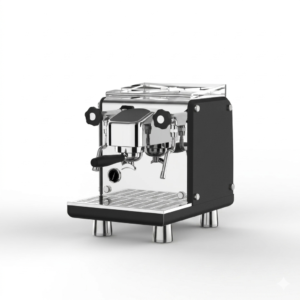
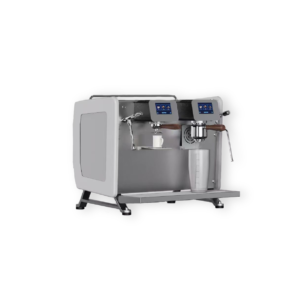
The Westeez KY-T22 Commercial Espresso Machine features a two-group configuration and three independent boilers designed for commercial espresso preparation.
This type of setup may be relevant to cafés that require consistent brewing and steaming performance during busy service periods.
For a broader comparison of equipment options, read the Westeez Best Espresso Machine for Small Cafe Buying Guide.
You can also explore the Westeez Commercial Espresso Machine Collection to compare machines for different café sizes and operating requirements.
When selecting equipment, consider daily sales volume, peak-hour demand, available space, staff workflow, and budget rather than coffee bean consumption alone.
Coffee Bean Consumption vs. Espresso Machine Capacity
Coffee bean consumption and machine capacity are related, but they are not the same measurement.
Coffee bean consumption answers:
How much coffee does the business need to purchase?
Espresso machine capacity answers:
How many drinks can the equipment and staff prepare during a given period?
For example, a café serving 200 espresso-based drinks per day at an 18g dose requires approximately 3.6 kg of coffee beans before waste.
However, those 200 drinks may not be distributed evenly throughout the day.
If 80 drinks are ordered during the morning rush, the café needs equipment, staff, and workflow capable of handling that peak period.
This is why café owners should evaluate both ingredient consumption and brewing capacity when planning their operations.
How to Forecast Coffee Bean Demand as Your Café Grows
A café’s coffee bean requirements may change as sales increase.
Suppose a new café initially sells 80 espresso-based drinks per day.
At 18g per drink:
80 × 18g = 1.44 kg per day.
After several months, sales increase to 150 drinks daily.
150 × 18g = 2.7 kg per day.
The business now requires nearly twice as much coffee for drink production.
This growth may affect:
- Supplier ordering frequency
- Storage requirements
- Grinder workload
- Espresso machine workflow
- Staffing needs
- Inventory management
Owners should review sales and purchasing data regularly instead of relying indefinitely on their original opening estimates.
Frequently Asked Questions
How many kilograms of coffee beans does a café use daily?
A café serving 100 espresso-based drinks with one 18g dose per drink uses approximately 1.8 kg of beans before waste. Actual usage depends on the menu, recipes, and sales volume.
How many cups of coffee can you make from 1 kg of beans?
At 18g per espresso dose, 1 kg provides approximately 55 complete doses, with a small amount remaining. This excludes grinder retention, calibration, and other waste.
How much coffee does a café selling 200 drinks per day need?
If every drink uses one 18g espresso dose, the café requires 3.6 kg per day before waste. Additional shots, alternative recipes, and waste will increase the amount.
How much should a coffee shop spend on beans?
The appropriate budget depends on wholesale bean prices, drink volume, recipe size, target selling prices, and profit margins. Owners should calculate the coffee cost per drink and compare it with total beverage revenue and other operating expenses.
How often should a café order coffee beans?
Ordering frequency depends on daily usage, supplier delivery schedules, storage conditions, and desired freshness. Many cafés benefit from smaller, predictable deliveries rather than maintaining unnecessarily large inventories.
Does a better espresso machine reduce coffee waste?
A reliable machine can support repeatable brewing conditions, but it does not guarantee lower waste. Grinder consistency, staff training, recipes, and inventory management are also important.
Final Thoughts
Understanding how much coffee a café uses per day is an essential part of managing purchasing costs and planning daily operations.
A simple calculation based on drink volume and coffee dose provides a useful starting point, but café owners should also account for grinder calibration, wasted shots, seasonal demand, and different brewing methods.
By tracking actual consumption, standardizing recipes, training staff, and ordering beans according to demand, coffee businesses can reduce unnecessary waste while maintaining drink quality.
As your café grows, choosing equipment that supports your workflow becomes equally important.
Explore Westeez Commercial Espresso Machines for Cafés and Businesses to compare professional equipment designed for different coffee service environments.
The goal is not simply to use fewer coffee beans. It is to use the right amount consistently, maintain beverage quality, and build a more efficient coffee business.

Add comment
You must be logged in to post a comment.