

No products in the cart.
How Much Counter Space Does a Coffee Shop Need for an Espresso Machine Setup?
Opening a coffee shop requires much more planning than simply choosing a good espresso machine. Many new café owners focus on machine price, features, and performance, but overlook one important factor:
How much space does the espresso machine setup actually require?
A poorly planned coffee bar can create workflow problems, slow down service, and make it difficult for baristas to work efficiently during busy hours.
The espresso machine, grinder, milk station, storage area, and cleaning space all need to work together as one system.
For café owners, understanding espresso machine counter space requirements before purchasing equipment can help create a more efficient and profitable coffee shop layout.
Why Espresso Machine Space Planning Matters for Coffee Shops
A commercial espresso machine is usually the center of a coffee shop workflow.
During peak hours, baristas repeatedly move between:
- Coffee grinder
- Espresso machine
- Milk station
- Cup storage
- Order pickup area
If these areas are too far apart, employees spend more time moving and less time serving customers.
A good espresso machine setup should provide:
- Efficient barista movement
- Easy access to equipment
- Enough preparation space
- Comfortable cleaning areas
Space planning is especially important for small cafés where every inch of counter space matters.
How Much Counter Space Does a Commercial Espresso Machine Need?
The amount of space required depends on:
- Machine size
- Number of groups
- Grinder placement
- Menu complexity
- Daily customer volume
There is no single perfect setup for every café, but the following guidelines can help business owners plan their equipment layout.
Single Group Espresso Machine Setup
Single-group commercial espresso machines are commonly used by:
- Small coffee shops
- Bakeries
- Boutique cafés
- Low-volume businesses
A typical setup requires space for:
- Espresso machine
- Coffee grinder
- Knock box
- Milk pitcher area
- Cup storage
A practical counter setup usually requires around 24–36 inches of dedicated workspace, depending on the equipment size.
For small businesses choosing their first professional machine, our guide on Best Coffee Machine for Small Business explains how equipment selection should match business size and expected demand.
A smaller footprint does not mean lower quality. The key is choosing equipment that fits your workflow.
Two Group Espresso Machine Setup
Two-group commercial espresso machines are designed for higher-volume environments.
They are commonly used in:
- Busy cafés
- Restaurants
- Hotels
- Locations with multiple baristas
Because of their larger size, they usually require more counter space.
A typical two-group setup needs approximately:
- 36–48 inches or more of counter space
- Additional grinder space
- Larger workflow area
For growing cafés, investing in a higher-capacity machine can improve speed during peak periods.
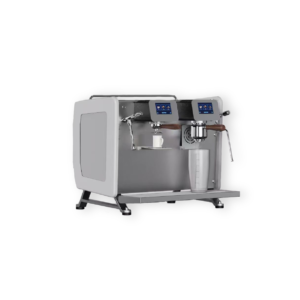
Westeez offers commercial solutions such as the Westeez KY-228 2 Group Commercial Espresso Machine, designed for businesses that need higher output and professional workflow performance.
Designing an Efficient Coffee Shop Espresso Machine Layout
A good coffee bar layout should follow the natural workflow of preparing espresso drinks.
A typical workflow looks like:
Coffee Storage
↓
Coffee Grinder
↓
Espresso Machine
↓
Milk Steaming Area
↓
Drink Finishing Area
↓
Customer Pickup
This arrangement reduces unnecessary movement and helps baristas prepare drinks faster.
According to the Specialty Coffee Association (SCA), professional coffee preparation depends not only on equipment quality but also on proper workflow and preparation practices.
How Much Space Does a Small Coffee Shop Need?
Small cafés often operate in limited spaces, making equipment planning even more important.
A compact coffee shop may need:
- One commercial espresso machine
- One grinder
- Storage shelves
- Cleaning area
- Small preparation zone
The goal is not to maximize equipment size, but to maximize efficiency.
A smaller café with lower daily volume may benefit from a compact commercial setup instead of purchasing oversized equipment.
Before choosing equipment, café owners should also understand the difference between consumer and professional machines. Our article Commercial Espresso Machine vs Home Espresso Machine: What’s the Real Difference? explains why commercial environments require different equipment standards.
Common Espresso Machine Space Planning Mistakes
Many café owners make layout mistakes before opening their business.
1. Not Leaving Enough Grinder Space
The grinder is used constantly and should be placed close to the espresso machine.
A cramped grinder position can slow down workflow.
2. Ignoring Cleaning Space
Espresso machines require regular cleaning and maintenance.
Baristas need enough room for:
- Backflushing
- Wiping equipment
- Refilling supplies
A crowded workspace makes maintenance more difficult.
For a complete maintenance routine, see our guide:
Commercial Espresso Machine Maintenance Checklist for Coffee Shops
3. Choosing Equipment Without Considering Future Growth
Some cafés buy equipment based only on their opening day sales.
However, business growth should also be considered.
A machine that works today may become a limitation when customer volume increases.
Planning Equipment Investment Around Your Café Space
Space planning and equipment investment should be considered together.
A larger machine may improve speed, but it also requires:
- More counter space
- Higher investment
- More maintenance planning
Before purchasing equipment, café owners should evaluate whether the expected sales justify the investment.
Our guide on How to Calculate the ROI of a Commercial Espresso Machine explains how businesses can evaluate equipment costs and long-term returns.
Choosing the Right Espresso Machine Setup for Your Business
The best espresso machine setup depends on your:
- Café size
- Daily customer volume
- Menu type
- Available workspace
- Future growth plans
A small café may succeed with a compact single-group setup, while a busy location may require a larger two-group system.
The goal is not simply buying the biggest machine.
The goal is creating a workflow where equipment, space, and employees work efficiently together.
Final Thoughts
Choosing an espresso machine is not only about technical specifications and price.
The available counter space and café layout can directly affect daily operations.
Before investing in commercial coffee equipment, café owners should carefully consider:
- Machine size
- Grinder placement
- Workflow design
- Cleaning space
- Future expansion
A well-planned espresso machine setup helps baristas work faster, improves customer experience, and creates a stronger foundation for long-term business growth.
Frequently Asked Questions
How much counter space does an espresso machine need?
Most commercial espresso machine setups require approximately 24–48 inches of counter space depending on the machine type and workflow requirements.
Can a small café use a commercial espresso machine?
Yes. Many small cafés use compact commercial espresso machines because they provide better durability and consistency than home machines.
Where should an espresso machine be placed in a coffee shop?
An espresso machine should be placed near the grinder, milk station, and preparation area to create an efficient workflow.
Should I buy an espresso machine before planning my café layout?
No. Equipment selection and café layout should be planned together to ensure enough space and efficient operation.


Add comment
You must be logged in to post a comment.