

No products in the cart.
Common Coffee Shop Equipment Mistakes New Café Owners Make (And How to Avoid Them)
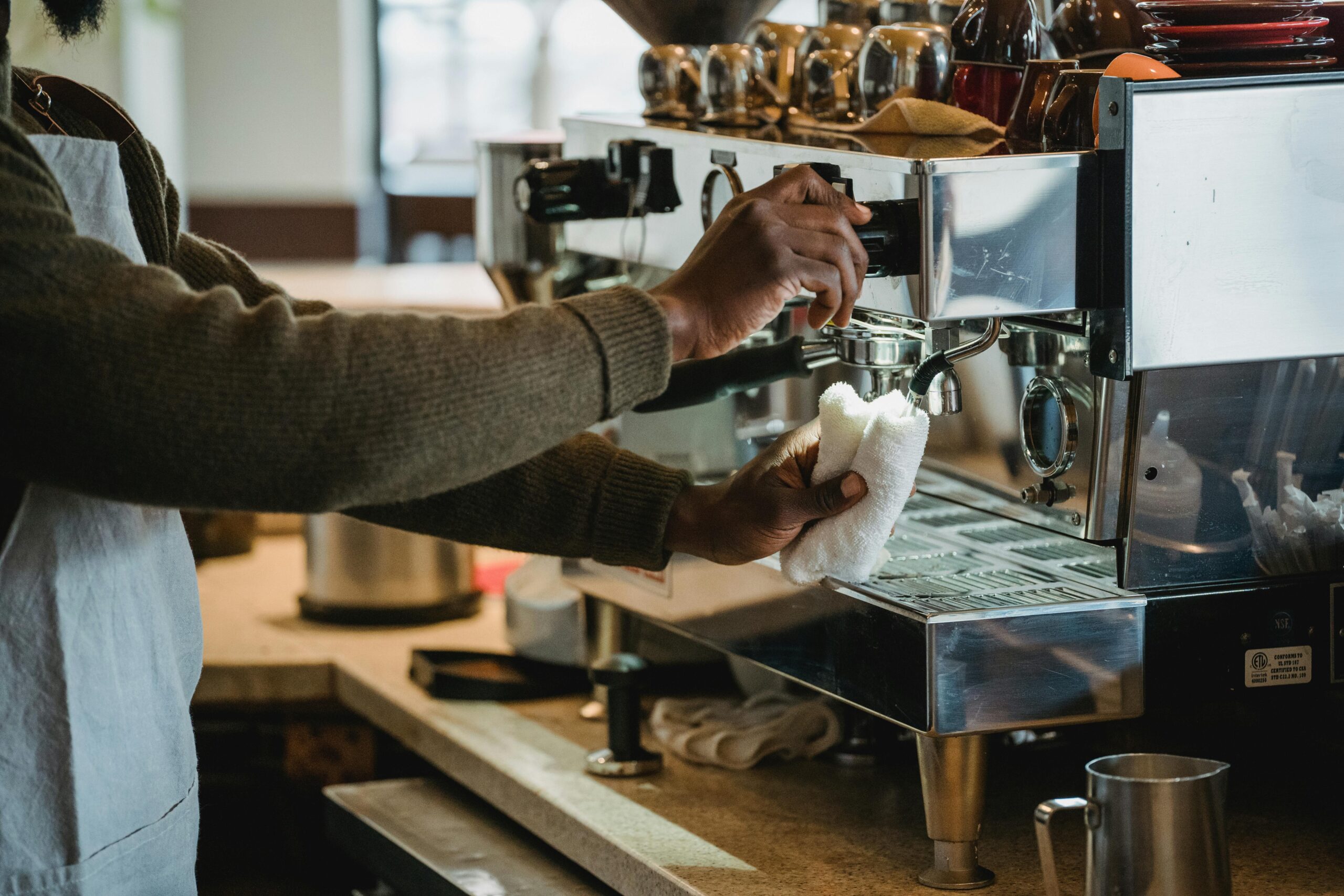
Most café equipment mistakes don’t happen because owners are careless. They happen because opening a café involves a hundred decisions at once, equipment feels like one of the more straightforward ones, and the consequences of getting it wrong don’t show up until you’re already in the middle of a busy service. By then, fixing the problem costs more than making the right call upfront would have.
Here are the mistakes that come up most consistently — and what to do instead.
Buying Consumer Equipment for Commercial Use
This is the most common mistake, and it’s understandable. A prosumer espresso machine that costs $400 makes real espresso. A commercial machine that costs $1,500 also makes espresso. Why spend four times as much?
Because consumer machines aren’t designed for consecutive drink preparation under sustained pressure. They overheat, they slow down, their components wear faster than the manufacturer intended, and they tend to fail during your busiest periods rather than your quietest ones. The upfront savings evaporate quickly when you’re paying for repairs or replacing the machine eighteen months in.
Commercial espresso machines are engineered for continuous daily operation. That’s not marketing language — it’s a meaningful engineering difference that shows up in recovery time, temperature stability, and long-term reliability. If you’re weighing options, our guide What Coffee Machine Is Best for Restaurants? covers the practical distinctions across different business types.
Choosing Equipment Based Purely on Price
Related to the above, but worth separating out because it applies beyond just the espresso machine. The cheapest option in any equipment category tends to carry hidden costs: more maintenance, more repairs, more downtime, and earlier replacement. The Specialty Coffee Association identifies consistency and reliability as essential to beverage quality and customer satisfaction — and those qualities aren’t evenly distributed across price points.
The better questions before any purchase are: What’s the build quality? What does the warranty actually cover? Are replacement parts available, and how much do they cost? Does the manufacturer have real support infrastructure? A machine that costs 30% more upfront but lasts twice as long and requires half the service calls is the cheaper machine over a five-year horizon.
Underestimating Your Volume
New café owners almost universally underestimate how many drinks they’ll eventually be making, and they buy equipment calibrated to their opening-week projections rather than their six-month reality. A machine rated for 30–50 drinks a day that ends up producing 150 will show the strain in slower recovery times, inconsistent extraction, and staff productivity that suffers because the equipment can’t keep pace.
The practical fix is to plan for peak demand, not average demand — and to build in some headroom for growth. Upgrading equipment because your business succeeded is an expensive and operationally disruptive problem to have. Our guide on How Many Cups Can a Commercial Espresso Machine Make Per Day? can help you calibrate the right capacity for your setup.
Skipping Water Filtration
Water filtration gets skipped for two reasons: it feels like an optional add-on, and the consequences aren’t immediate. Both of those perceptions are wrong. Hard water causes scale buildup inside boilers and heating elements, reduces efficiency over time, and causes damage that shortens machine life in ways that are entirely preventable. The National Coffee Association identifies water quality as a critical factor in both coffee extraction and overall beverage quality — it affects the cup as well as the equipment.
A professional filtration system isn’t a luxury. It’s one of the highest-return investments you can make alongside the machine itself, and it should be on the checklist before opening day rather than added later when problems appear.
Not Planning for Growth
Equipment that perfectly matches your current needs can become your biggest operational constraint eighteen months from now. Cafés that gain traction tend to do so faster than their owners expect, and scrambling to upgrade equipment while running a busy service is genuinely difficult.
Before committing to any major purchase, think through where you want the business to be in two to three years. Future menu expansion, increased foot traffic, catering, potential additional locations — all of it has equipment implications. Scalable equipment purchased at the start will almost always be cheaper than the same capability acquired under pressure later.
Underestimating Maintenance
Every piece of café equipment requires consistent maintenance, and the time and cost involved tends to be higher than new owners anticipate. Daily cleaning, backflushing the espresso machine, grinder calibration, water filter replacement, descaling — these aren’t optional tasks that can be deferred when things get busy. They’re what separates equipment that lasts fifteen years from equipment that lasts five.
The full picture on how maintenance affects equipment longevity is covered in How Long Do Commercial Espresso Machines Last? — worth reading before you finalize any purchase decision.
Buying Equipment Without a Workflow Plan
Good equipment positioned badly creates problems that good equipment positioned well wouldn’t. Before purchasing anything, map out how your baristas will actually move, where customers will queue, how cleaning access works, what counter space looks like with everything installed. An efficient layout improves service speed, reduces staff frustration, and makes the daily cleaning routine more manageable.
The best cafés design the workspace before they buy the equipment, not after. It sounds like an obvious step but it’s one that frequently gets skipped in the rush to get everything ordered and installed.
Choosing the Wrong Brewing System for Your Actual Needs
Some cafés invest in single-serve pod systems when their volume and quality goals clearly call for a commercial espresso setup. Others buy large multi-group machines when their realistic daily output doesn’t justify the cost or complexity. Both directions are expensive mistakes.
The right system depends on your drink volume, available space, staff experience level, customer expectations, and budget — and those variables interact in ways that aren’t always obvious. Single-Serve Coffee Systems vs Commercial Espresso Machines: Which Is Better For Your Café? works through the comparison in detail if you’re still deciding.
What a Solid Equipment Strategy Actually Looks Like
The pattern among experienced café owners is consistent: they don’t ask what’s cheapest. They ask whether the equipment will support growth, handle peak-hour demand, stay easy to maintain, and deliver consistent quality over time. That framing leads to better decisions than price-first shopping almost every time.
For most small and medium cafés, a practical starting point is a commercial espresso machine, a quality grinder, a water filtration system, a reliable POS setup, and a realistic maintenance plan. Equipment sized for where you’re going, not just where you are.
The full commercial espresso range is available at https://westeez.com/, and for high-volume environments specifically, the Westeez JC-128 Commercial Double Head Espresso Machine is worth a close look.
Before finalizing any major purchases, the Coffee Shop Equipment Checklist: Everything You Need to Open a Café in 2026 covers the full picture.
The Bottom Line
Equipment mistakes are among the most fixable problems a café can have — but they’re much easier to fix before opening than after. The right equipment won’t guarantee success, but the wrong equipment will make success harder to sustain than it needs to be. Spend the time upfront, think past the opening week, and treat water filtration as non-negotiable. The rest tends to fall into place.
One comment
Pingback:
How Often Should You Descale a Commercial Coffee Machine? Complete Café Maintenance Guide