

No products in the cart.
How Long Does a Commercial Espresso Machine Last? Lifespan & Maintenance Guide
A commercial espresso machine is one of the most important equipment investments for a café, restaurant, hotel, or other foodservice business.
Unlike a home espresso machine, commercial equipment is designed for repeated daily use and professional service environments. But even a well-built machine will eventually require major repairs or replacement.
So, how long does a commercial espresso machine last?
There is no single number that applies to every machine. A practical planning range is often 5 to 15 years or more, depending on machine construction, daily drink volume, water quality, cleaning, preventive maintenance, and whether replacement parts and professional service remain available.
The more useful question is not simply how old the machine is, but:
How much work has the machine done, how well has it been maintained, and is it still reliable enough for your business?
Understanding commercial espresso machine lifespan can help café owners plan equipment budgets, reduce unexpected downtime, and decide when repairing an older machine makes more financial sense than replacing it.
How Long Does a Commercial Espresso Machine Usually Last?
Commercial espresso machines do not have a fixed expiration date.
Two machines that are the same age can have very different remaining service lives because their operating conditions may be completely different.
For example, a machine producing 40 drinks per day in a carefully maintained café may experience considerably less wear than a machine producing several hundred drinks every day in a busy coffee shop.
As a general planning guide:
| Commercial Espresso Machine Type | Typical Planning Range* | Common Application |
|---|---|---|
| Compact / entry commercial | About 3–6+ years | Small cafés, restaurants, low-to-moderate volume |
| Mid-range commercial | About 5–10+ years | Independent cafés and growing businesses |
| Heavy-duty professional | About 8–15+ years | Busy cafés, restaurants, hotels, high-volume operations |
*These are general planning ranges rather than guaranteed service lives. Actual lifespan depends heavily on usage, water quality, maintenance, operating conditions, component quality, and serviceability.
Some commercial machines can remain in service beyond these ranges when they are properly maintained and supported with replacement parts.
The important point is that commercial espresso machine lifespan should be treated as a range, not a fixed number.
What Determines the Lifespan of a Commercial Espresso Machine?
Several factors can significantly change how long a machine remains reliable.
The most important include:
- Daily drink volume
- Water quality
- Cleaning and maintenance
- Machine construction
- Operating conditions
- Availability of replacement parts
- Professional servicing
Let’s look at each one.
1. Daily Usage Volume
Daily usage is one of the biggest factors affecting equipment wear.
A machine producing 30–50 drinks per day does not experience the same workload as a machine producing several hundred drinks during continuous café service.
Every espresso preparation involves multiple mechanical and thermal processes, including water movement, valve operation, brewing and, depending on the drink, steam production.
For this reason, café owners should consider peak hourly demand, not only the machine’s age.
For example:
| Daily Coffee Volume | General Equipment Consideration |
|---|---|
| Under 50 drinks/day | Compact commercial equipment may be sufficient |
| 50–150 drinks/day | Mid-range commercial equipment may be appropriate |
| 150–300 drinks/day | Higher-capacity equipment becomes more important |
| 300+ drinks/day | Heavy-duty commercial equipment should be considered |
These figures are planning examples rather than universal capacity limits.
A business with a concentrated morning rush may need more capacity than another business with the same daily volume spread evenly across the day.
If you’re still choosing equipment, our guide to Commercial Espresso Machine Features That Actually Matter for Café Owners explains which specifications are worth considering before purchasing.
2. Water Quality Can Have a Major Impact
Water is one of the most overlooked factors in espresso machine maintenance.
Water that promotes excessive scale formation can affect boilers, heating components, valves, pipes, and other internal parts over time.
The Specialty Coffee Association has published research discussing water composition, espresso extraction, scale formation, and the need to consider water conditions when operating espresso equipment.
This is why commercial operators should not simply install a machine and forget about the water going into it.
Depending on the local water supply, a café may need:
- Water filtration
- Scale control
- Regular water testing
- Appropriate treatment for the machine
- Periodic inspection of internal components
The correct water treatment system depends on the machine manufacturer’s requirements and the local water conditions.
Good water management is not just about better-tasting coffee—it can also help protect the equipment.
3. Maintenance Has a Direct Impact on Equipment Life
Regular maintenance is one of the most practical ways to protect a commercial espresso machine.
A maintenance program should normally include:
Daily tasks
- Flush the group heads
- Clean the portafilters
- Clean steam wands after use
- Wipe external surfaces
- Empty and clean the drip tray
- Follow the manufacturer’s cleaning procedure
Weekly tasks
- Perform the recommended backflush or cleaning cycle
- Inspect group-head components
- Clean removable components
- Check steam-wand condition
- Inspect seals and gaskets
Periodic professional service
Depending on usage and manufacturer recommendations, professional service may include inspection or replacement of:
- Gaskets
- Valves
- Pumps
- Heating components
- Pressure-related components
- Electrical components
- Other wear parts
For a detailed routine, see our Commercial Espresso Machine Maintenance Checklist for Coffee Shops.
You can also read:
How Often Should You Service a Commercial Espresso Machine? A Café Owner’s Maintenance Guide
The exact service interval should always follow the machine manufacturer’s recommendations and the workload of the business.
4. Machine Construction and Serviceability Matter
Two machines with similar specifications may have very different long-term ownership experiences.
When evaluating a commercial espresso machine, consider:
- Boiler design
- Heating system
- Group-head construction
- Pump type
- Valve quality
- Temperature-control system
- Materials and build quality
- Ease of access for service
- Availability of replacement parts
- Manufacturer or supplier support
A machine that can be properly serviced and repaired may remain useful for considerably longer than equipment that is difficult to maintain or impossible to source parts for.
This is why serviceability should be part of the purchase decision—not an afterthought.
The Specialty Coffee Association’s commercial equipment program evaluates commercial espresso machines against criteria including espresso quality, temperature stability, consistency, and overall performance.
5. Operating Environment Also Matters
A commercial espresso machine may operate in very different environments.
For example:
- A quiet boutique café
- A busy specialty coffee shop
- A restaurant
- A hotel breakfast area
- A bakery
- A high-volume foodservice operation
The machine needs to match its environment.
Excessive heat, poor ventilation, inadequate cleaning space, unstable electrical supply, poor water conditions, or improper installation can all create additional operating problems.
Before purchasing a commercial machine, make sure the installation environment meets the manufacturer’s requirements for:
- Power
- Water
- Drainage
- Ventilation
- Counter space
- Service access
6. Replacement Parts and Professional Service
A machine does not necessarily become obsolete when one component fails.
Many commercial espresso machines contain replaceable wear components.
The more important question is:
Can the machine still be economically repaired?
Before purchasing equipment, ask the supplier:
- Are replacement parts available?
- How long are common parts expected to remain available?
- Is technical support available?
- Can the machine be serviced locally?
- Are common wear components replaceable?
- What is the recommended preventive-maintenance schedule?
These questions can become extremely important several years after the initial purchase.
Signs Your Commercial Espresso Machine May Be Reaching the End of Its Useful Life
Age alone does not mean a machine needs to be replaced.
Instead, look for changes in reliability, performance, and repair costs.
1. Increasing Repair Frequency
Occasional replacement of normal wear parts is expected.
However, repeated failures across several major systems may indicate that the machine is becoming increasingly expensive to maintain.
Pay attention to repeated problems involving:
- Pumps
- Heating systems
- Valves
- Electrical controls
- Pressure systems
- Boiler-related components
2. Inconsistent Espresso Performance
If the machine can no longer maintain consistent brewing conditions despite proper cleaning and servicing, investigate the cause.
Potential warning signs include:
- Inconsistent extraction
- Unstable temperature
- Pressure problems
- Slow heat recovery
- Unusual steam performance
Before replacing the machine, have a qualified technician determine whether the problem can be economically repaired.
3. Increasing Downtime
For a commercial café, downtime has a direct business cost.
If the machine repeatedly stops working during busy service periods, the cost is not limited to the repair bill.
You may also lose:
- Beverage sales
- Staff productivity
- Customer satisfaction
- Service speed
At some point, replacing an unreliable machine may provide better business value than continuing to repair it.
4. Replacement Parts Become Difficult to Source
A machine may still technically work but become increasingly difficult to maintain if important parts are no longer available.
This is why parts availability and after-sales support should be considered when buying new equipment.
Repair or Replace a Commercial Espresso Machine?
There is no universal replacement age.
Instead, compare the cost and reliability of continued ownership with the benefits of new equipment.
Repair may make sense when:
- The machine is relatively young
- The problem is isolated
- Replacement parts are readily available
- Repair costs are reasonable
- Espresso quality remains consistent
- The machine still matches your business volume
Replacement may make more sense when:
- Major repairs happen repeatedly
- Multiple systems are failing
- Parts are difficult to source
- Downtime is increasing
- The machine no longer matches business volume
- New equipment would significantly improve workflow
- Long-term repair costs approach the cost of replacement
When evaluating the decision, don’t compare only the repair invoice with the purchase price.
Consider the total cost of ownership, including:
Repairs + downtime + maintenance + energy + productivity + expected remaining service life
Our guide on How to Calculate the ROI of a Commercial Espresso Machine can help café owners evaluate equipment investments from a longer-term perspective.
Choosing a Commercial Espresso Machine for Long-Term Use
If you are purchasing a new machine, the best way to improve long-term value is to choose equipment that matches your expected workload.
Small or lower-volume cafés
Prioritize:
- Appropriate machine capacity
- Compact footprint
- Easy maintenance
- Suitable water treatment
- Reliable supplier support
Growing cafés
Consider:
- Greater brewing capacity
- Better recovery during busy periods
- More robust components
- Easier servicing
- Future business growth
High-volume cafés and foodservice operations
Prioritize:
- High production capability
- Multiple brewing groups where appropriate
- Strong steam performance
- Suitable boiler configuration
- Reliable service support
- Availability of replacement components
The goal is not to buy the largest machine.
The goal is to buy a machine that is correctly matched to your workload.
Westeez Commercial Espresso Machines for Different Business Volumes
Westeez offers several commercial espresso machine configurations for different operating environments.
Instead of choosing based only on price or appearance, businesses can compare the machines according to expected coffee volume and workflow.
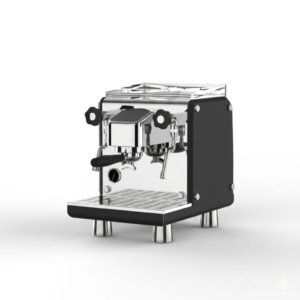
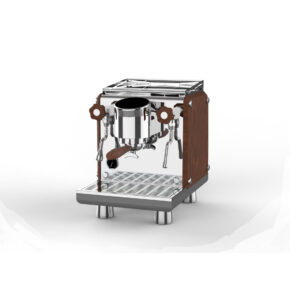
Westeez KY-MINIA6 Single Group Espresso Machine
For smaller cafés and businesses with moderate espresso demand, a single-group machine can provide a more compact commercial setup.
The Westeez KY-MINIA6 Single Group Espresso Machine can be considered for:
- Small cafés
- Restaurants
- Bakeries
- Dessert shops
- Small businesses with moderate coffee demand
The important consideration is whether the machine’s capacity and configuration match the business’s actual workload.
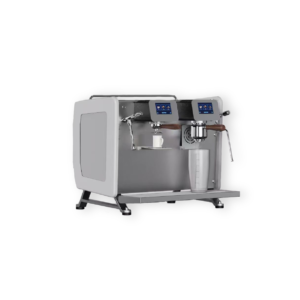
Westeez KY-228 Two Group Commercial Espresso Machine
As coffee demand increases, a two-group configuration can provide additional brewing capacity and greater flexibility during busy service.
The Westeez KY-228 2 Group Commercial Espresso Machine can be considered for growing cafés, restaurants, and other commercial environments with higher espresso demand.
Westeez JC-128 Commercial Espresso Machine
For higher-volume professional applications, businesses may need a larger commercial configuration.
The Westeez JC-128 Commercial Double Head Espresso Machine features a three-boiler configuration and is positioned for higher-volume professional use.
This type of equipment is more appropriate when coffee production is a significant part of the business and the operation requires greater capacity.
How to Extend the Life of a Commercial Espresso Machine
If you want your commercial espresso machine to remain reliable for as long as possible, focus on the fundamentals.
1. Use appropriate water treatment
Monitor local water conditions and use filtration or treatment appropriate for the machine.
2. Follow daily cleaning procedures
Don’t wait until coffee residue becomes a visible problem.
3. Follow the manufacturer’s maintenance schedule
Preventive maintenance is usually less disruptive than emergency repairs.
4. Train employees
A machine can be damaged by incorrect operation, poor cleaning practices, or improper handling.
5. Monitor performance
Changes in temperature, pressure, steam, extraction or recovery can be early signs of developing problems.
6. Keep service records
Record:
- Cleaning
- Parts replaced
- Repairs
- Professional servicing
- Water treatment
- Performance issues
A maintenance log can help identify recurring problems and make replacement decisions easier.
Commercial Espresso Machine Maintenance Checklist
| Maintenance Task | Recommended Approach |
|---|---|
| Group-head cleaning | Daily / according to manufacturer |
| Portafilter cleaning | Daily |
| Steam wand cleaning | After every milk use |
| Drip tray cleaning | Daily |
| Backflush / cleaning cycle | Follow manufacturer instructions |
| Water filtration | Monitor and replace as required |
| Gasket inspection | During scheduled maintenance |
| Pump inspection | Professional service |
| Boiler inspection | Professional service |
| Electrical inspection | Professional service |
| Full equipment service | Based on workload and manufacturer guidance |
For foodservice businesses, equipment cleanliness is also part of the wider food-safety environment. The FDA Food Code addresses the cleaning and maintenance of equipment and food-contact surfaces, although local jurisdictions determine which food-code requirements apply to a particular establishment.
Commercial Espresso Machine Lifespan: What Should You Budget For?
Instead of assuming that your machine will last exactly a certain number of years, plan for the complete lifecycle.
A realistic equipment budget should consider:
Initial purchase
Installation
Water treatment
Routine maintenance
Replacement parts
Unexpected repairs
Eventual replacement
This approach makes it easier to compare two machines with different purchase prices.
A machine with a lower initial price is not automatically the better investment if it requires frequent repairs or cannot support your expected workload.
Likewise, buying an oversized machine can tie up capital that could be used elsewhere in the business.
FAQ: Commercial Espresso Machine Lifespan
How long does a commercial espresso machine last?
A commercial espresso machine can often remain in service for around 5–15 years or longer, but actual lifespan varies significantly with usage, water quality, maintenance, construction, and serviceability.
Can a commercial espresso machine last 10 years?
Yes. A well-maintained commercial machine can remain in service for 10 years or more when its workload, water conditions, maintenance and service support are appropriate.
How often should a commercial espresso machine be serviced?
There is no universal interval for every machine. Service frequency should be based on manufacturer recommendations, daily usage, water conditions and operating environment. High-volume businesses generally need more frequent professional attention.
Does hard water shorten espresso machine life?
Poorly managed water conditions can contribute to mineral scale and other equipment problems. Appropriate water treatment and monitoring can help protect boilers and other internal components.
Is it better to repair or replace an old espresso machine?
Repairing can make sense when the machine remains reliable and replacement parts are available. Replacement becomes more attractive when repairs are frequent, downtime is increasing, parts are difficult to source, or the machine no longer meets business requirements.
What is the most important factor in commercial espresso machine lifespan?
There is no single factor. Usage intensity, water quality, cleaning, preventive maintenance, machine construction and serviceability all contribute to long-term performance.
Conclusion: Think in Terms of Equipment Lifecycle, Not Just Age
So, how long does a commercial espresso machine last?
A practical planning range is often 5 to 15 years or more, but the calendar alone does not determine whether a machine is still a good business asset.
The most important factors are:
- Daily and peak-hour usage
- Water quality
- Cleaning
- Preventive maintenance
- Machine construction
- Operating environment
- Replacement-parts availability
- Professional service
- Business growth
The best strategy is to choose equipment that matches your workload, establish a consistent maintenance routine, monitor performance, and evaluate repair costs before the machine becomes a source of repeated downtime.
For businesses comparing commercial espresso equipment, Westeez provides different machine configurations for smaller, growing and higher-volume operations.
A commercial espresso machine is not simply a piece of equipment—it is a long-term operating asset. The better you manage its lifecycle, the more value you can get from your investment.

Add comment
You must be logged in to post a comment.