

No products in the cart.
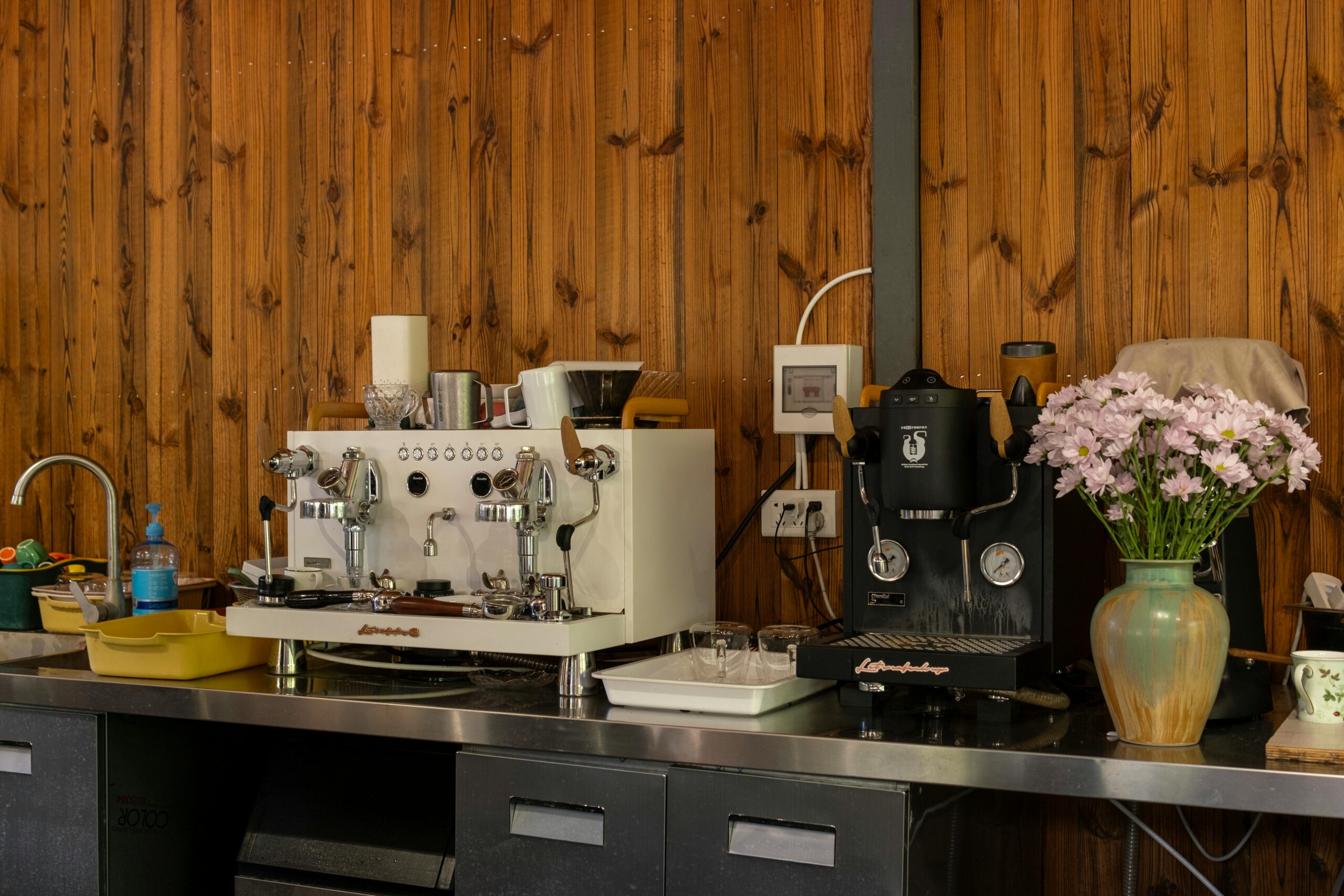
Using a Home Espresso Machine in a Coffee Shop: The Honest Answer
It’s one of the first questions most aspiring café owners ask, usually when they’re staring at equipment price tags and trying to figure out where to cut costs: can I just use a home espresso machine to get started?
The honest answer is: technically yes, practically no — and understanding why that distinction matters can save you a significant amount of money and stress down the line.
What You’re Actually Asking
When people ask whether a home machine will “work” in a café, they’re usually asking whether it will physically produce espresso. It will. The more useful question is whether it will hold up to the actual demands of running a coffee business — and there, the answer changes pretty quickly.
Home espresso machines are engineered around a specific use case: a handful of drinks a day, operated by someone familiar with the machine, with natural recovery time built in between shots. That’s a fundamentally different operating environment from even a modest café, and the engineering reflects that difference at every level.
Where the Gaps Actually Show Up
Volume Tolerance
This is the most obvious difference, and it’s a significant one. A home machine is typically designed for somewhere between 5 and 20 drinks per day. A commercial machine is built to handle 100 to 500 or more — and to do so continuously, without meaningful degradation in performance across a full service day.
Push a home machine into commercial territory and the wear accelerates fast. Components that might last years under home use start failing in months under café pressure.
Temperature Stability Under Load
This one matters more than it might seem. Espresso extraction is genuinely sensitive to temperature — even small fluctuations affect the flavor and consistency of what ends up in the cup. Home machines typically manage temperature fine for low-volume use, but under sustained demand that stability degrades. You start getting inconsistent shots, and inconsistent shots mean an inconsistent customer experience, which is the thing you can least afford.
Commercial machines are built to maintain stable brewing temperatures even during back-to-back drink preparation — precisely what happens during a morning rush. The Specialty Coffee Association has detailed resources on why this consistency is foundational to professional coffee service:
Recovery Time
Between shots, a machine needs to return to optimal brewing conditions before the next pull. Home machines take noticeably longer to do this, which creates a natural speed ceiling on your output. In a home kitchen, that pause barely registers. In a café queue, it’s the difference between smooth service and visibly impatient customers.
Commercial machines are specifically engineered for back-to-back preparation. It’s not an added feature — it’s a basic functional requirement for any meaningful volume.
Build Quality
The component differences between home and commercial machines aren’t just a matter of scale. Commercial equipment uses heavier boilers, more robust pumps, more advanced temperature control systems, and valves rated for continuous operation over years of heavy use. These aren’t upgrades on a spectrum — they’re responses to genuinely different operating conditions.
The Math That Catches People Off Guard
Here’s a scenario worth walking through. A small café serving 80 customers a day — modest by any measure — where half those customers order espresso-based drinks means 40 to 60 drinks daily. That number sounds manageable in the abstract, until you’re trying to pull it through a machine designed for a fraction of that workload.
Output degrades. Service slows. The machine runs hotter than it was designed to, for longer than it was designed to. And then, usually at the worst possible moment, something fails.
The repair costs, revenue lost during downtime, and eventual replacement expense tend to dwarf whatever was saved on the original purchase. It’s a pattern experienced operators describe consistently, which is part of why the industry advice on this point is so uniform.
For a clearer picture of what commercial equipment actually costs across different tiers — including entry-level options that are more accessible than many people assume:
https://westeez.com/how-much-does-a-commercial-espresso-machine-cost-in-2026-a-complete-buyers-guide
When a Home Machine Might Actually Be Fine
To be fair, there are real scenarios where starting with home equipment is defensible.
Concept validation before committing capital. If you’re doing occasional pop-up events or testing demand at a farmers market before signing a lease, a home machine can serve that function. The key is treating it as a temporary arrangement with a clear upgrade timeline, not as the foundation of your operation.
Very low-volume or private use. An office machine for staff, or equipment for a private event that isn’t serving paying customers at volume — these are categorically different from a café environment.
Minimum-viable early testing. Some entrepreneurs want proof of concept before any significant outlay. That’s entirely reasonable. Just go in clear-eyed: the machine will be a limiting factor, and plan the upgrade path before you need it urgently.
Even in these cases, the move to commercial equipment should be part of the roadmap from day one, not something you think about after the home machine starts struggling.
The Signs You’ve Outgrown It
If you’re currently running a home machine and wondering whether it’s time to switch, the answer is probably yes if any of the following apply: you’re consistently hitting 30–50 drinks a day or more, multiple staff members are operating the machine (home machines are particularly sensitive to variable handling), your menu is espresso-focused, or you’re actively trying to grow volume.
Most businesses reach this point faster than expected. Growth is good news — but only if your equipment can keep pace.
For more on making the broader equipment decision well:
https://westeez.com/best-coffee-machine-for-small-business
Machines Built for the Actual Job
For cafés, restaurants, bakeries, and hospitality businesses that need reliable daily output, commercial espresso equipment is where the market starts making sense for professional use. Westeez’s lineup covers a range of volume requirements:
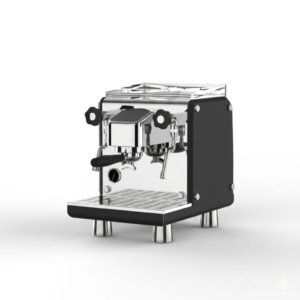
- Westeez KY-168 Commercial Espresso Machine — a well-suited entry point for start-up cafés and smaller operations
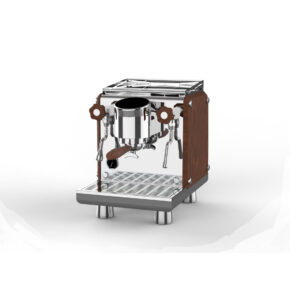
- Westeez KY-T22 Commercial Coffee Machine — aimed at medium-volume workflows and businesses in a growth phase
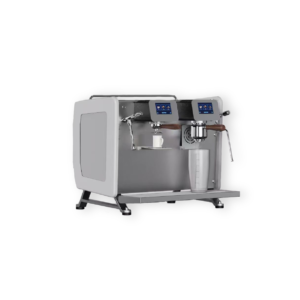
- Westeez JC-128 Double Head Espresso Machine — designed for high-demand environments where multiple baristas need to work simultaneously without bottlenecks
The full collection:
https://westeez.com/product-category/commercial-espresso-machines-for-cafes-businesses
Maintenance Applies to Both
Whatever equipment you’re running, maintenance quality determines how long it actually performs. That means daily cleaning and backflushing, consistent water filtration, and scheduled descaling — the frequency depending on your water hardness and daily volume. The National Coffee Association covers water quality and equipment care as part of a broader approach to coffee program management:
For specific guidance on descaling schedules:
https://westeez.com/how-often-should-you-descale-a-commercial-coffee-machine
Questions That Come Up Often
Is it actually illegal to use a home machine in a café?
In most jurisdictions, no specific law prohibits it. The more relevant constraints are practical: commercial machines meet professional operational demands in ways home equipment doesn’t. Local health inspection requirements can touch on equipment standards, so it’s worth checking what applies in your area.
What’s the realistic daily drink limit for a home machine?
Most home machines start showing strain well before 20 drinks a day under sustained commercial conditions. The exact threshold varies by model, but it’s a useful ceiling to hold in mind when you’re estimating whether your volume has outpaced your equipment.
Why do commercial machines cost so much more?
Larger boilers, higher-rated pumps, more sophisticated temperature management systems, and components engineered for continuous operation over years of heavy use. It’s not padding — it’s the cost of building something for a genuinely different set of demands.
How long do commercial machines last?
With consistent maintenance, most commercial espresso machines provide reliable service for 5–10 years. Some go longer. The variable is almost always the quality of the maintenance routine rather than the machine’s inherent lifespan.
Is commercial equipment actually worth it for a small operation?
For businesses serving customers daily and aiming to grow, yes — and usually decisively. The reliability, output consistency, and lower repair frequency add up quickly when you’re looking at total cost over a few years of operation.
The Bottom Line
The distance between “can I use a home machine?” and “should I use a home machine?” is where most café owners learn an expensive lesson. Consumer equipment can produce espresso. It can’t reliably do what a commercial environment actually demands of it.
If you’re serious about building a coffee business, commercial equipment isn’t a luxury upgrade — it’s the baseline for doing the job properly. The right machine doesn’t just make better coffee. It gives you the operational stability to actually run a business, serve customers consistently, and grow without hitting artificial ceilings imposed by your equipment choices.
Add comment
You must be logged in to post a comment.